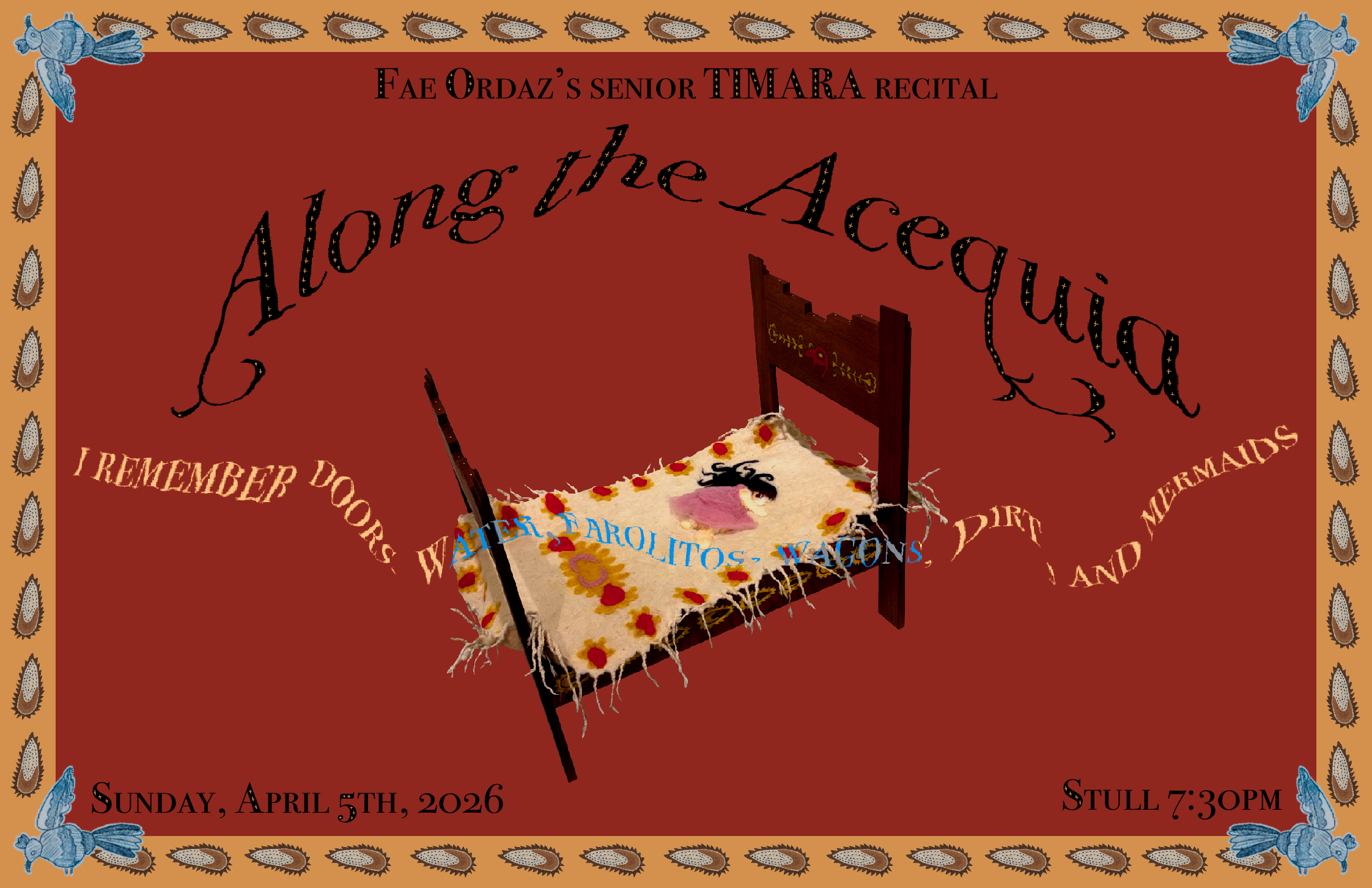
ALONG THE ACEQUIA, I REMEMBER DOORS, WATER, FAROLITOS, WAGONS, DIRT, AND MERMAIDS. |
|
“Whereas urbanized Americans are accustomed to being driven by the clock, many rural residents of the Southwest still think in terms of the position of the sun or the passage of the seasons. To a great extent it is the habitat that dictates, rather than the human being[…] It is in this spirit of La Tierra Sagrada, The Sacred Earth, that the Nuevo Mexicano people of the real communities of the Rìo Grande del Norte continue to pursue their cultural destiny.” (Jack Loeffler, Introduction XI) 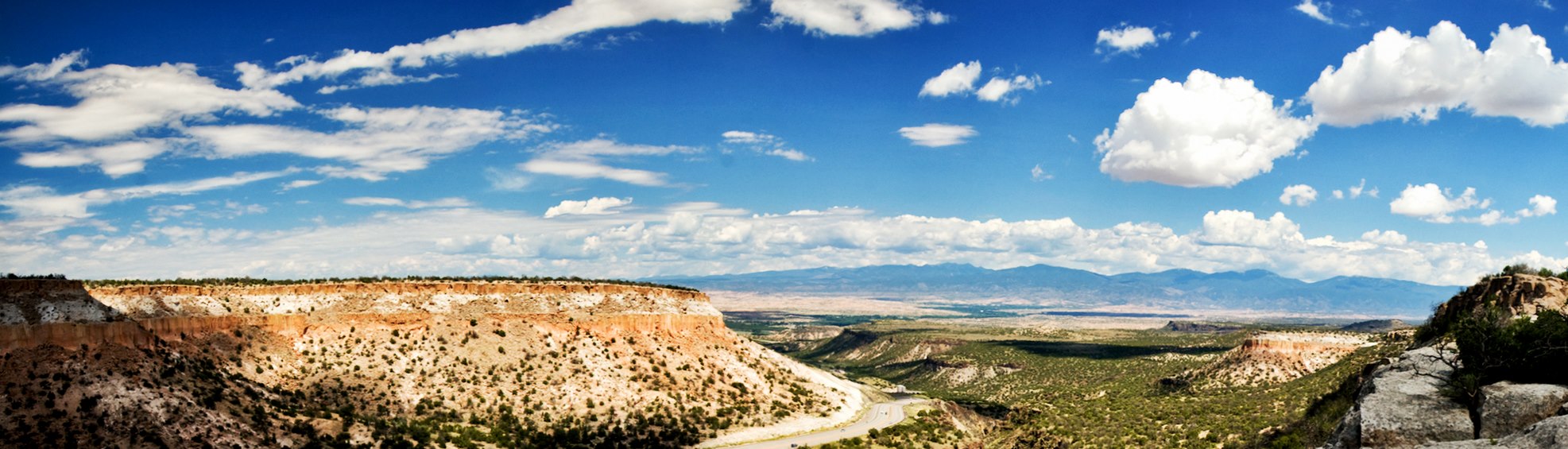
I remember the house I was born in on Velarde St. Only a few memories exist there, but I remember on the corner a yard like a cemetery of flickering Guadalupe’s. I remember biking around cul-de-sacs on Camino Carlita, next to coyote fences, keeping my eyes up to the wide open sky. I was born in Santa Fe, New Mexico. Although neither of my parents are from New Mexico, I have always called myself a New Mexican. I remember living in New York City this summer, unable to look out hundreds of miles ahead of me. I decided to take a trip home for a couple of weeks. I remember sitting by the Rio Grande in Pilar and just watching the water. I spent all the time I could outside. The houses you see on the map are all the places I lived in Santa Fe, NM, since leaving for Oberlin, with the exception of my two best friends Lucia Ortiz and Claire Christensen’s houses. 
Vivian Bailey's design for my map 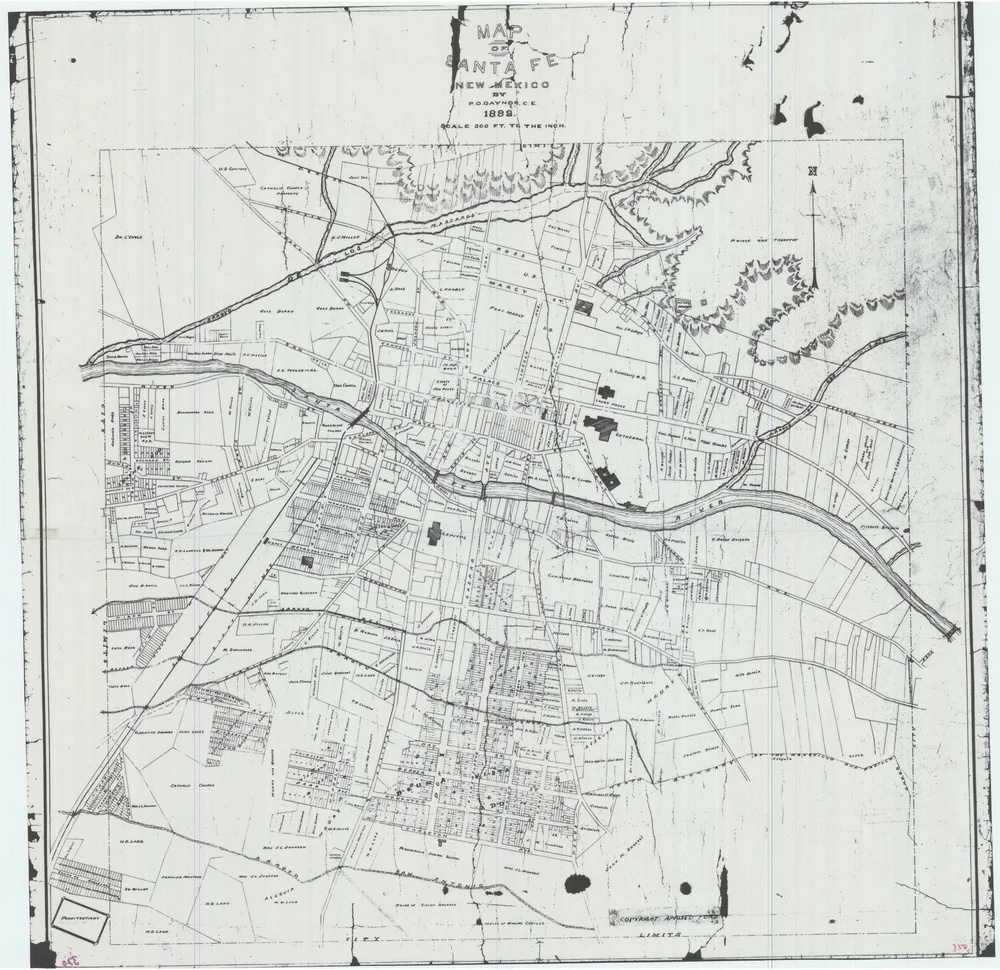
1892 Map of Santa Fe, New Mexico by P.O. Gaynor, C. E. <.em> |
COLCHA |
|
In times I’ve sought comfort, I turn and return to embroidery, to a slow and repetitive stitch. When I was home this summer, I went to an exhibit at SITE Santa Fe. I picked up a book from the exhibit book store titled New Mexico Colcha Club: Spanish Colonial Embroidery & the Women Who Saved It. It describes the craft group in Española, NM, Arte Antiguo, that connected over monthly meetings where they discussed, practiced, and shared colcha embroideries with each other. Here is a brief description of what “colcha” is: Colcha is a stitch, a bedspread, and an embroidery style. Like the land it comes from, it moves slowly. Slowness is not just a description of the stitch; it is a philosophy of making, remembering, and surviving. The term “Colcha” comes from the Spanish word for bedspread, but has since been used to describe the Northern New Mexican embroidery style, and the stitch itself. 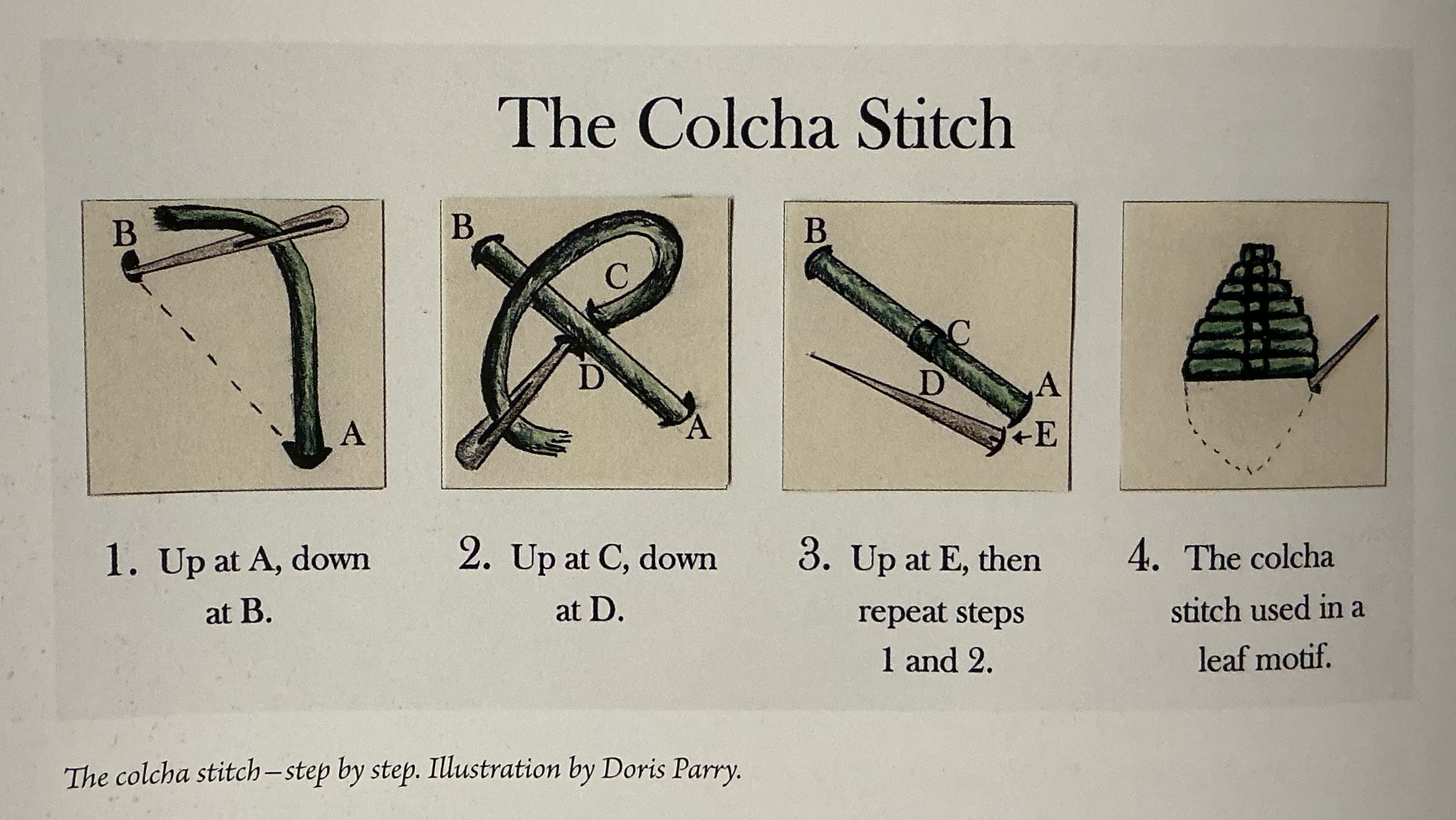
There are two types of Colcha embroidery, wool-on-wool and wool-on-cotton. Wool-on-wool is a much older style when all that Northern New Mexicans had access to was the wool from their churro sheeps. They would loosely weave a piece of undyed fabric, then cover the entire tapestry with little colcha stitches. Wool-on-cotton is a style that started after the Santa Fe Trail opened up and gave New Mexicans access to different types of fabric, like cotton. Because cotton was stronger and more tightly woven than wool, there was more possibility to embroidery intricate details of small scale, relying on the durability of the cotton. The embroidery that I’ve made for my recital is a wool-on-cotton Colcha. 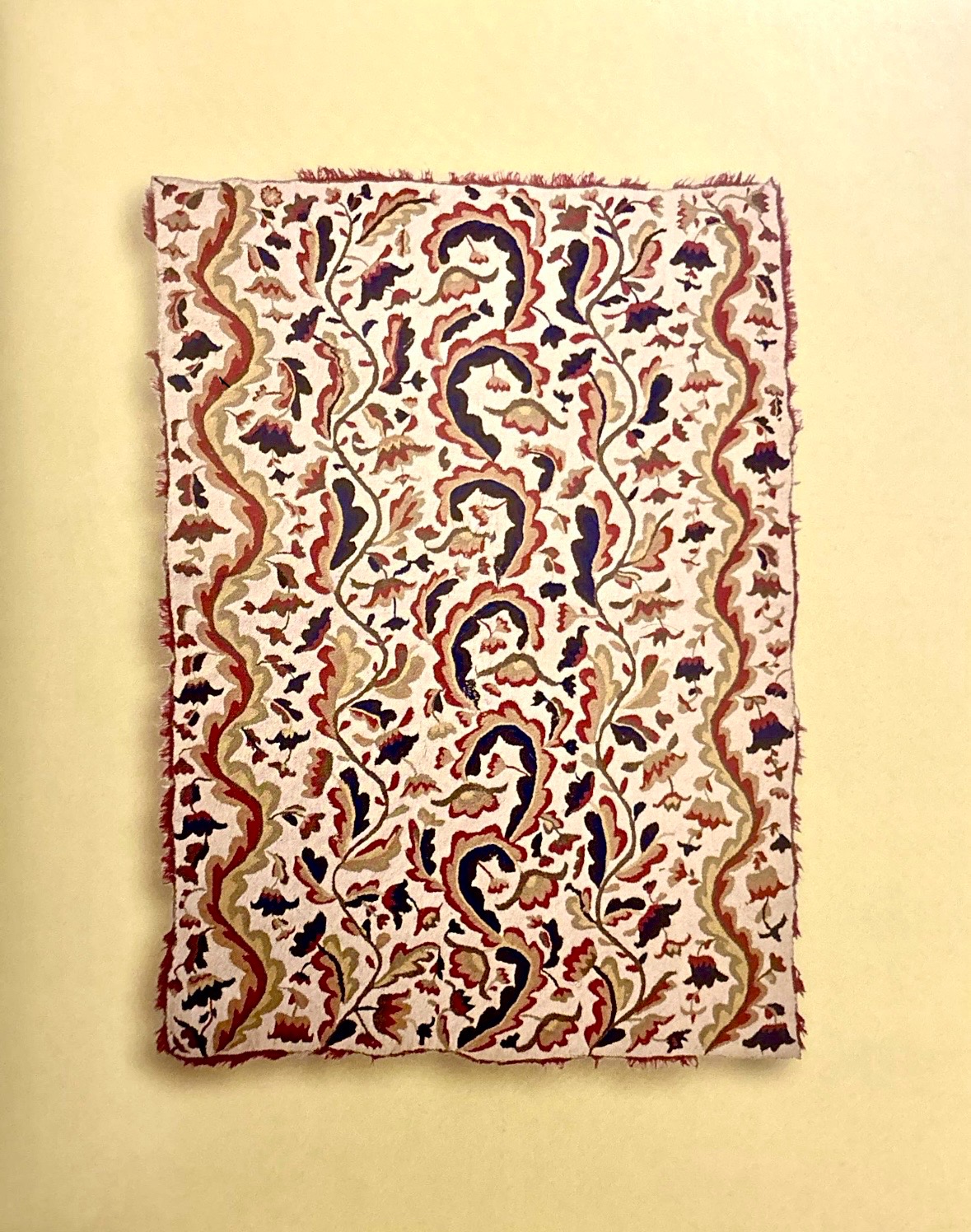
Wool-on-wool 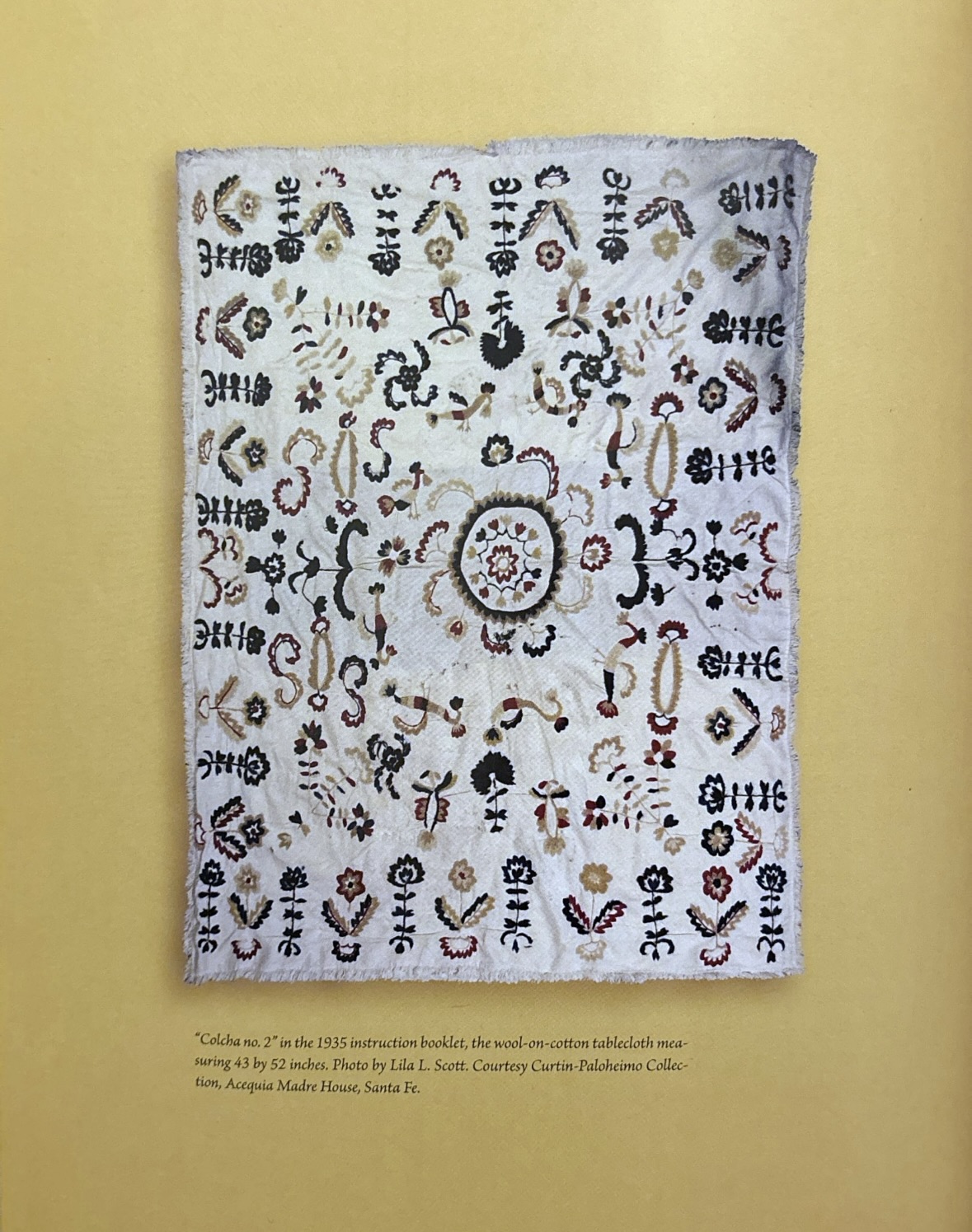
Wool-on-cotton New Mexico was the first state during the great depression to receive federal funding, as part of the New Deal programs, for “craft.” During this time, educators attempted to revive Colcha through design workbooks. 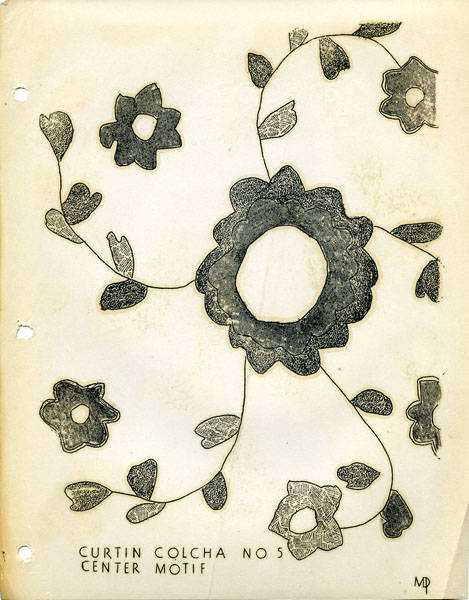

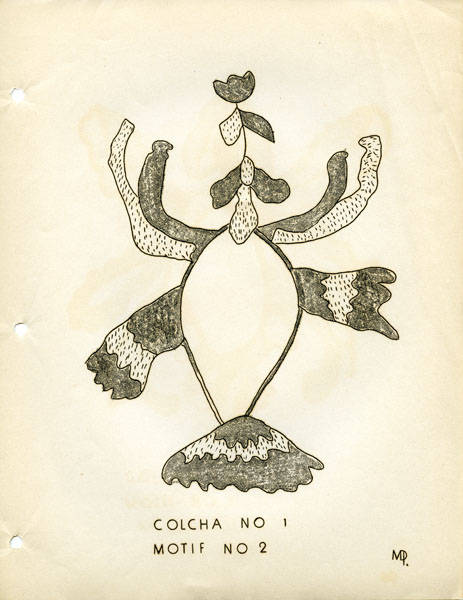
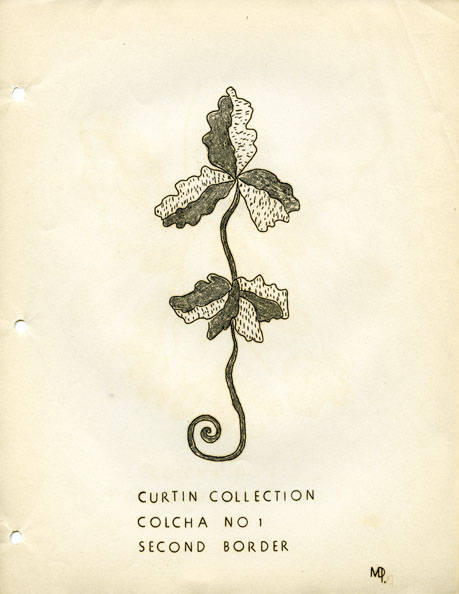
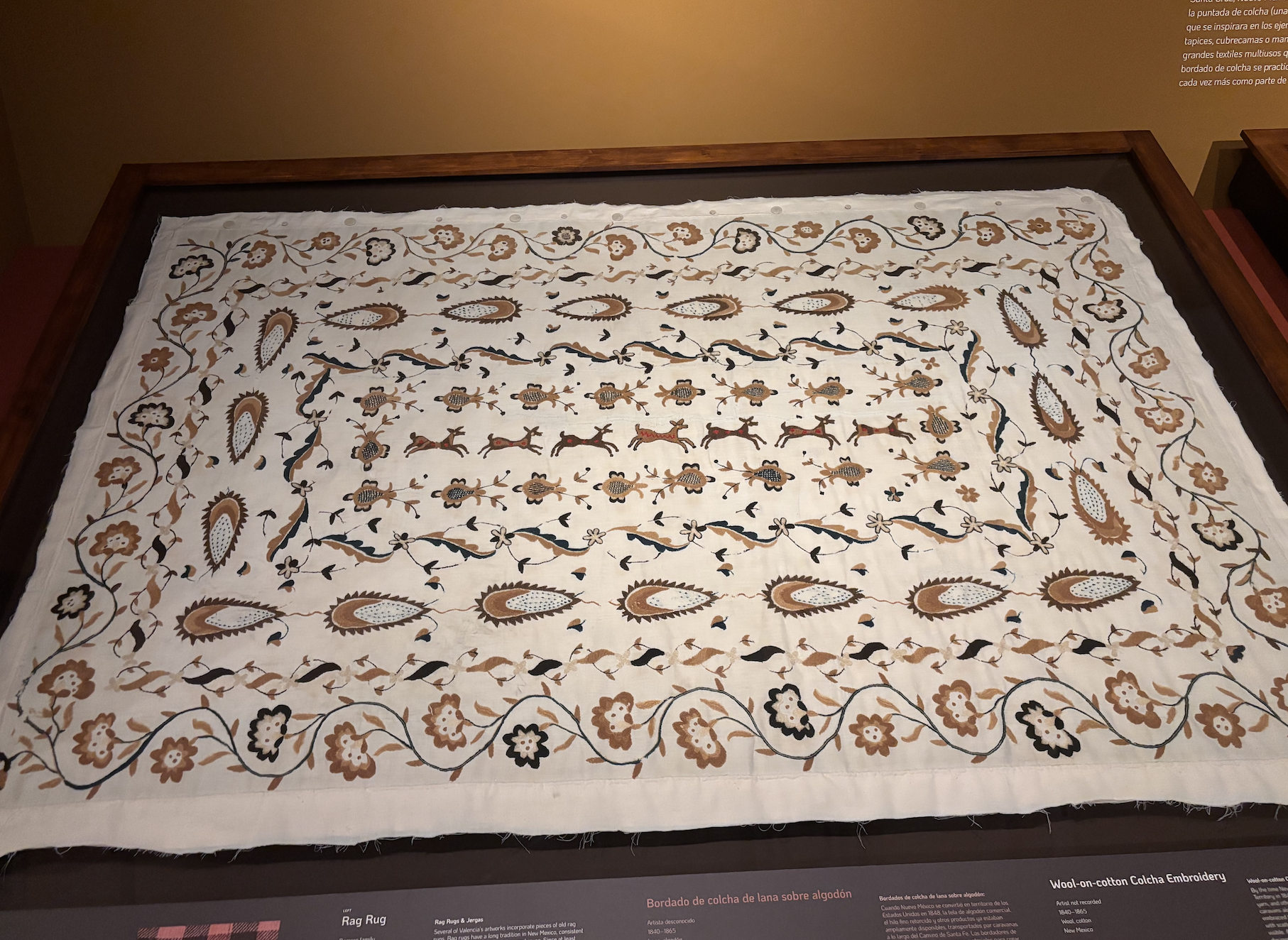
Wool-on-cotton colcha embroidery at the Santa Fe International Folk Art Museum 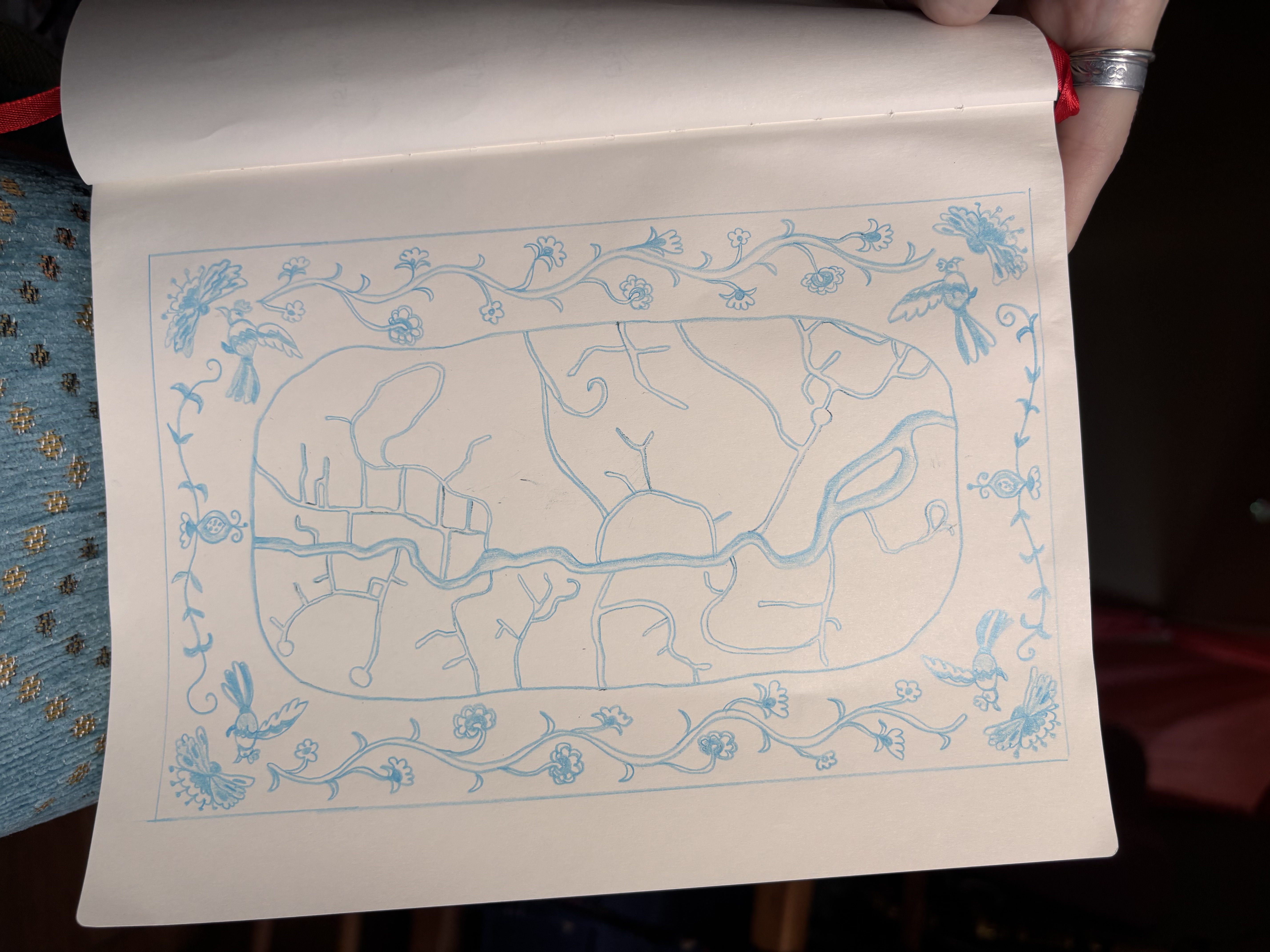
First sketch of recital tapestry design 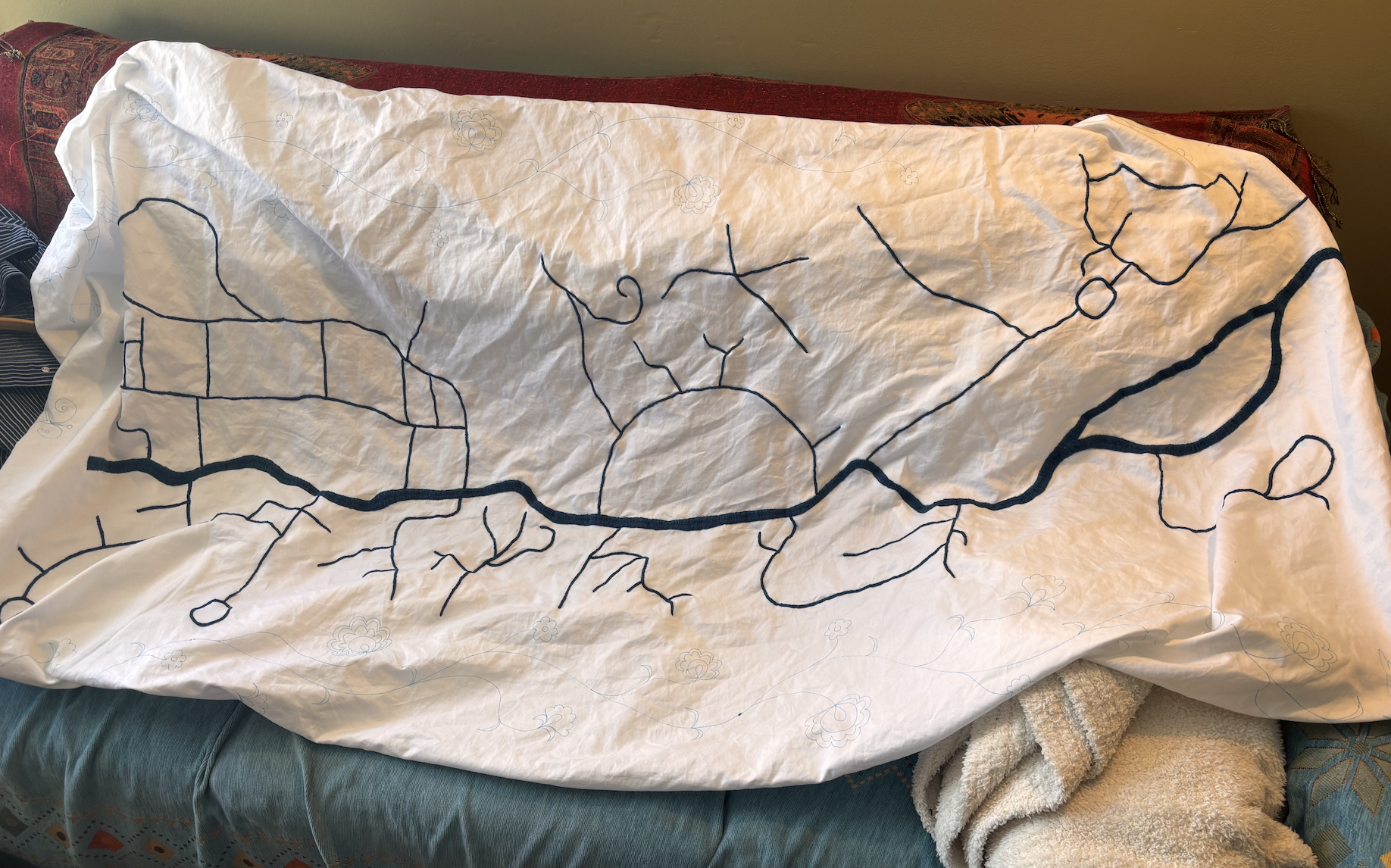
My embroidered map To know more about the full history of Colcha, here is more in-depth essay I wrote. |
SYMBOLS/EX-VOTOS |
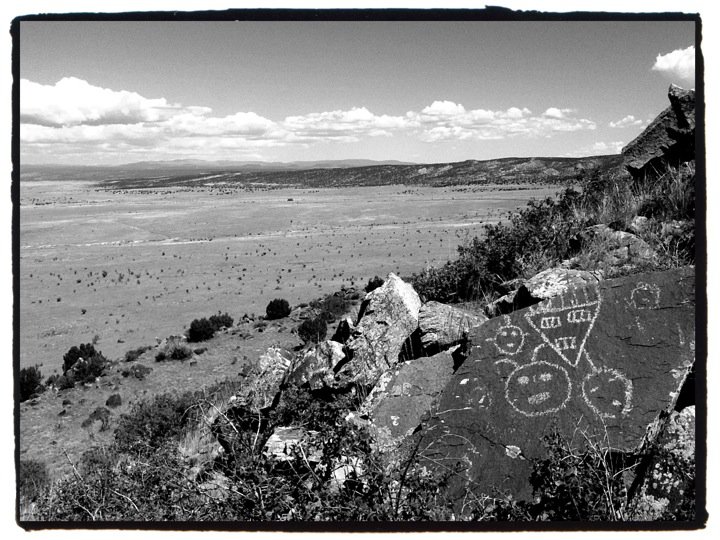
I remember going on hikes with my dad on the mesas, looking for petroglyphs, rock engraved symbols. I remember going to my moms performances in San Miguel Chapel, the oldest Catholic church in the United States, enchanted by the ex-votive offerings at the altar. 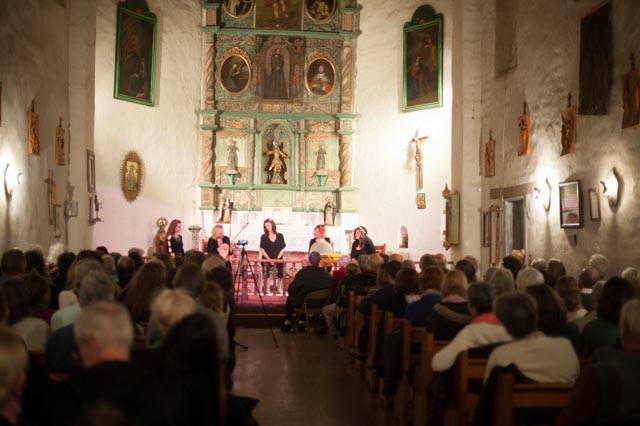
My mom’s band Rumelia Collective performing at San Miguel Chapel An ex-voto, meaning “from the vow made,” is a votive offering to a saint. In the article, “Understanding Ex Votos,” Mariolina Rizzi Salvatori calls them “an invisible thread that links humanity to the supernatural.” They are also, “offered as thanks for unexpected miracles, functioning as public affirmations of God’s constant powerful presence in the lives of the faithful.” They are usually in the form of metal ornaments (in shapes of jewels, wedding gowns, solder uniforms, braids of hair, prosthetics, crutches, or a representational part of the body) hung on the wall next to the statue of the saint. Ex-votos also exist as detailed paintings describing the miracle, known as retablos. 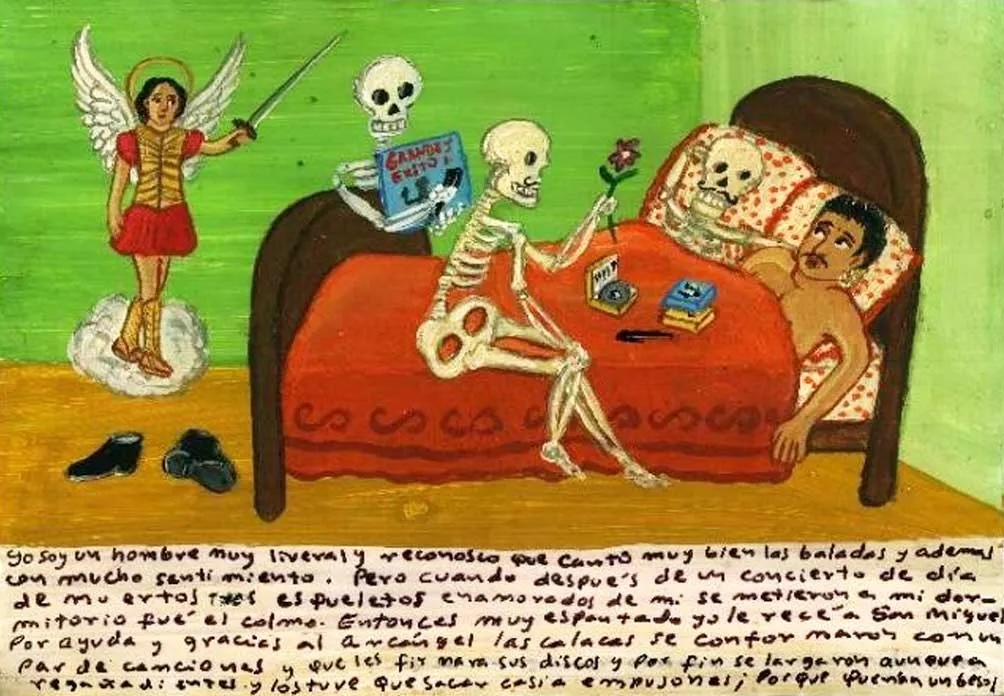
Painted ex-voto Santa Fe is a very old Catholic town, its name translates to “Holy Faith.” Although I didn’t grow up religious, the traditions, the religious symbols, the ex-votos, are everywhere. I remember offering my own ex-voto – my crutches – to the Santuario de Chimayo. 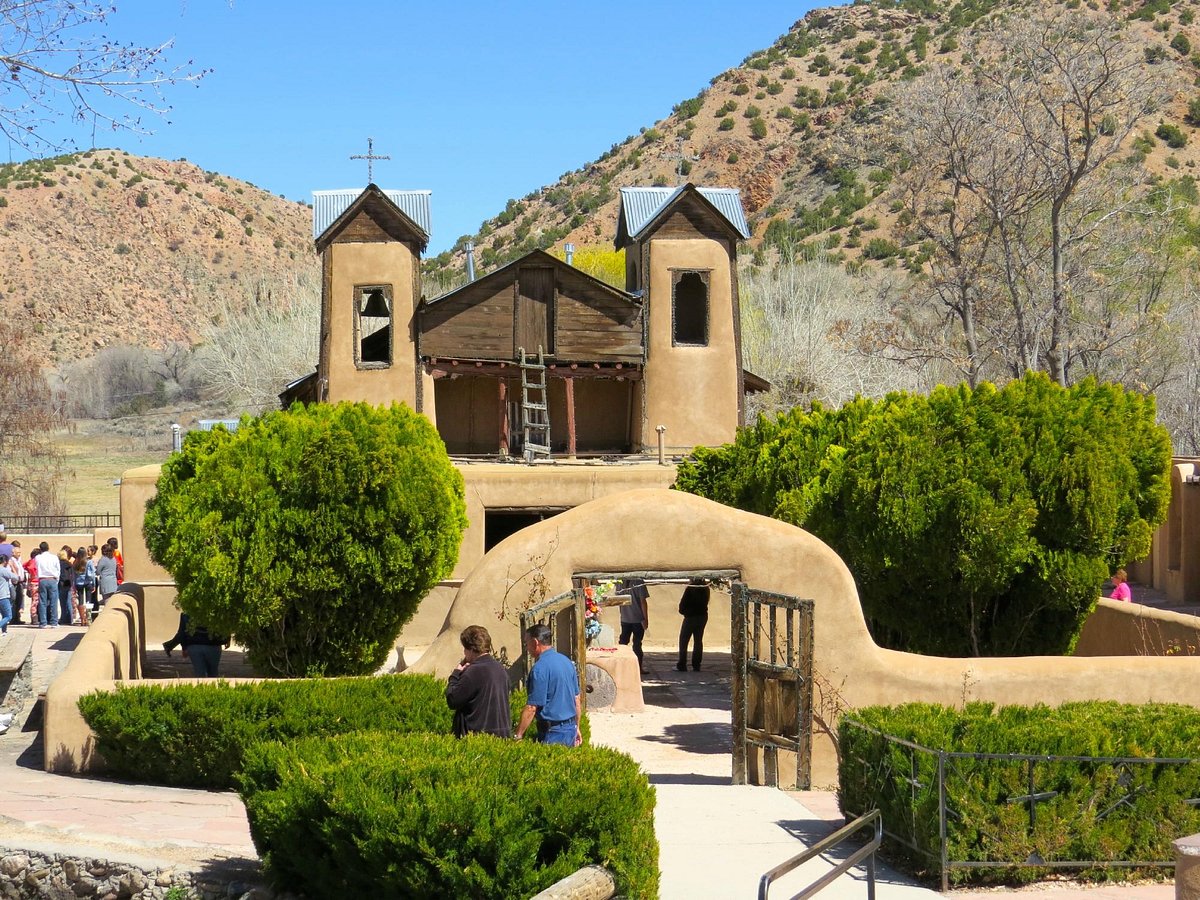
The Santuario de Chimayo is a beautiful Catholic church in Chimayo, NM that is known for its tierra sagrada (“holy dirt”). I remember hearing the story that when the Spaniards arrived in America, an Abeyta (“friar”) was passing through New Mexico when he saw a beautiful crucifix in the distance. He took the crucifix with him on his journey west and the next morning the crucifix was gone, discovered in the same exact spot where he found it first. This happened three times. He then realized that the land must be holy and he had to stay and build the Santuario de Chimayo. The exact spot where the crucifix was is now in a small crowded room where you can gather up the holy dirt in plastic containers to be used for your own personal healing. The two rooms on either side of the church are filled with ex-votos; photographs, shoes, and crutches. My parents offered my own crutches there when I no longer needed them. Afterwards, I remember eating some of the best homemade tamales in the gift store around the corner. 
Ex-voto offering rooms 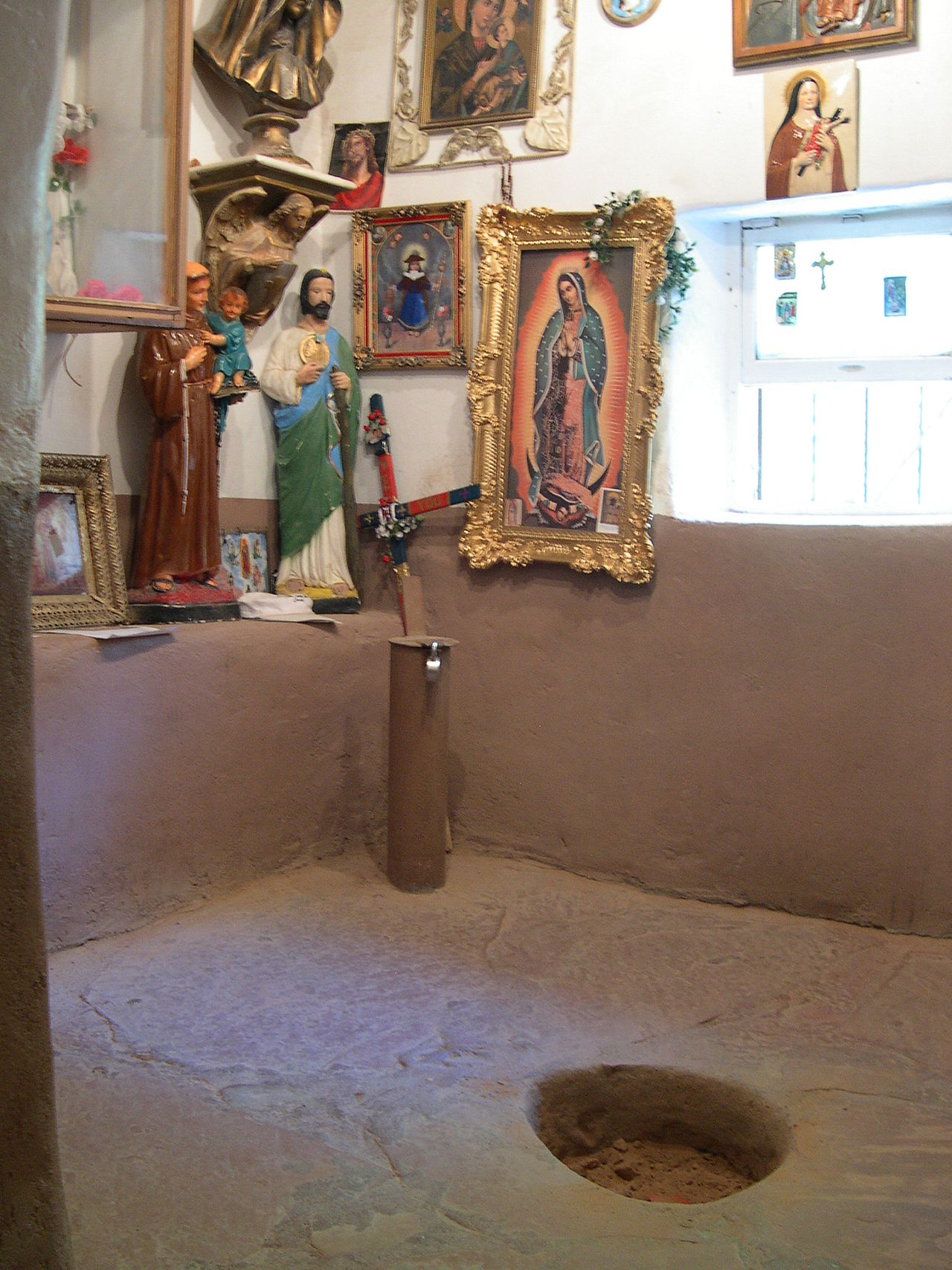
El pocito “little well” for the holy dirt 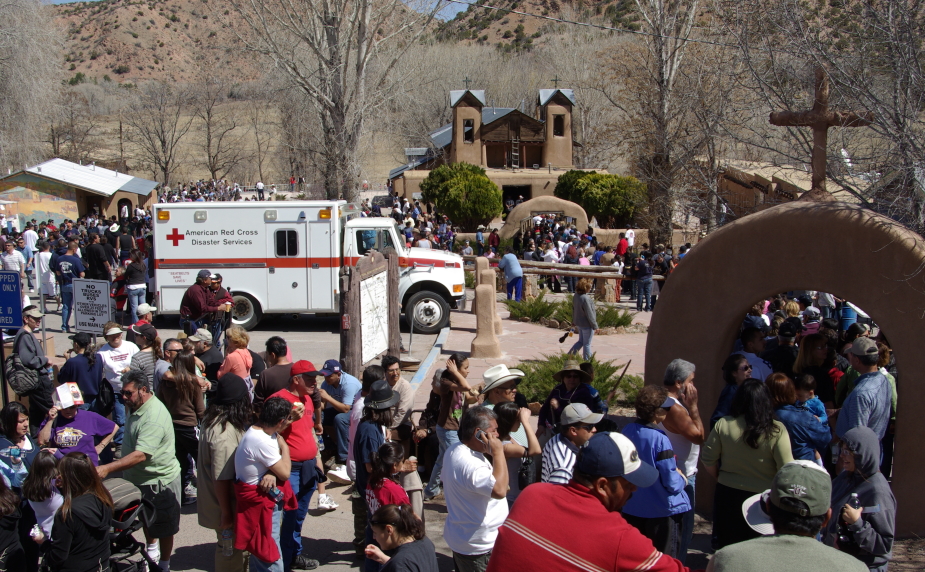
Chimayo is also a huge national end site for pilgrimages on Easter Sunday. Chimayo has a strong connection with Colcha embroidery as well. The prayer rooms that held the ex-votos used to be places where women would work on their embroideries and sell them to acquire funding for construction of the church. |
BISTAB/CIRCUITS |
|
I was introduced to e-textiles at my time here in Oberlin, through former TIMARA technical director Abby Aresty. She showed the website, “HOW TO GET WHAT YOU WANT” by KOBAKANT (Mika Satomi and Hannah Perner-Wilson). Both Mika and Hannah are incredible e-textile artists (Hannah worked on Imogen Heep’s mi.mu gloves). After working through some of the projects, I realized that a lot of the e-textile work was basically making MIDI instruments with conductive thread, neoprene, copper fabric, etc. But I wanted to try and challenge myself to remove the “computer”. I took Physics: Electronics my first year, but honestly, I don't remember much now. This summer, while apprenticing for Daniel Fishkin, we talked a lot about Peter Blasser’s synthesizers. Of course, Peter Blasser is a TIMARA alum, and he’s incredible (check out his website before he takes it down!). I was inspired by his “rollable synthesizer.” I think that he made it during his time here at Oberlin: I reached out to him wondering what kinds of circuits he used and he responded with this email: 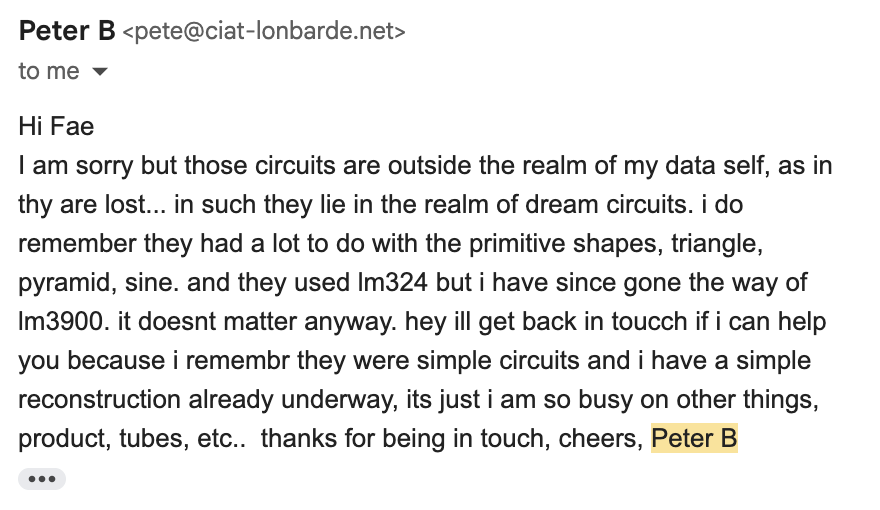
I then reached out to my friend Eli Rosenkim, who is a wizard at circuitry and a big fan of Peter Blasser’s work. We started talking about Peter’s “tocante’s:” “The Tocante instruments rely solely on the materials of electronic components to tune the oscillators, thus eliminating the need to intentionally control tuning by both instrument builder and performer. The instruments, built in three primary “shapes,” triangle, square, and circle, are played by touching these runes on their outer edge. However, they can also be circuit-bent by fingers drifting into the heart of the circuit board, where their sandrodes lie […] Tocante is a store at the mall, but I had not known that it also means “regarding, or about” in Spanish. Serendipitously, I can argue that this instrument ensemble is ‘about electronics itself,’ by way of its idea of tuning […] The derivation of Tocante, in Spanish, is from ‘tocar,’ meaning ‘to touch,’ which also happens to be a goal of the ensemble.” (Peter Blasser’s Wesleyan University Dissertation, Stores at the Mall) 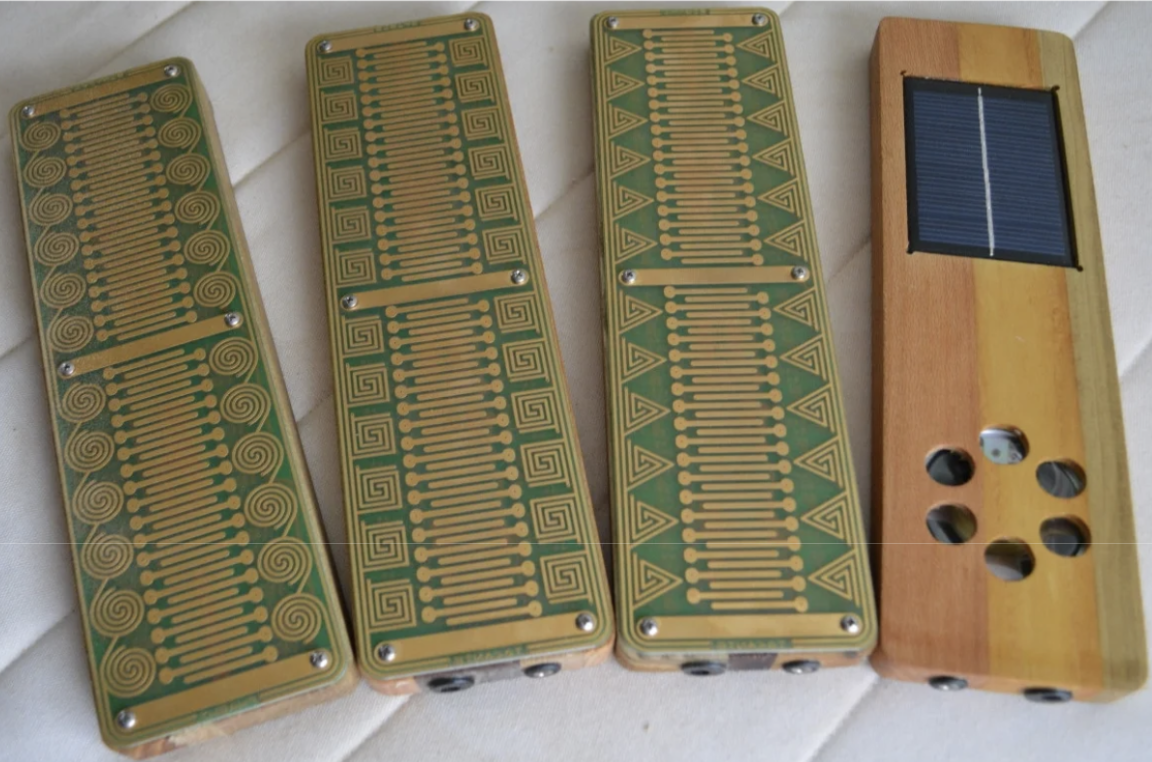
Peter Blasser’s tocante instruments He has built a couple of versions of these instruments, each based on a different “primitive shape.” The circuit that I used – rather, the only circuit that I was successful at building – was his “bistab” circuit, which is essentially a square wave. 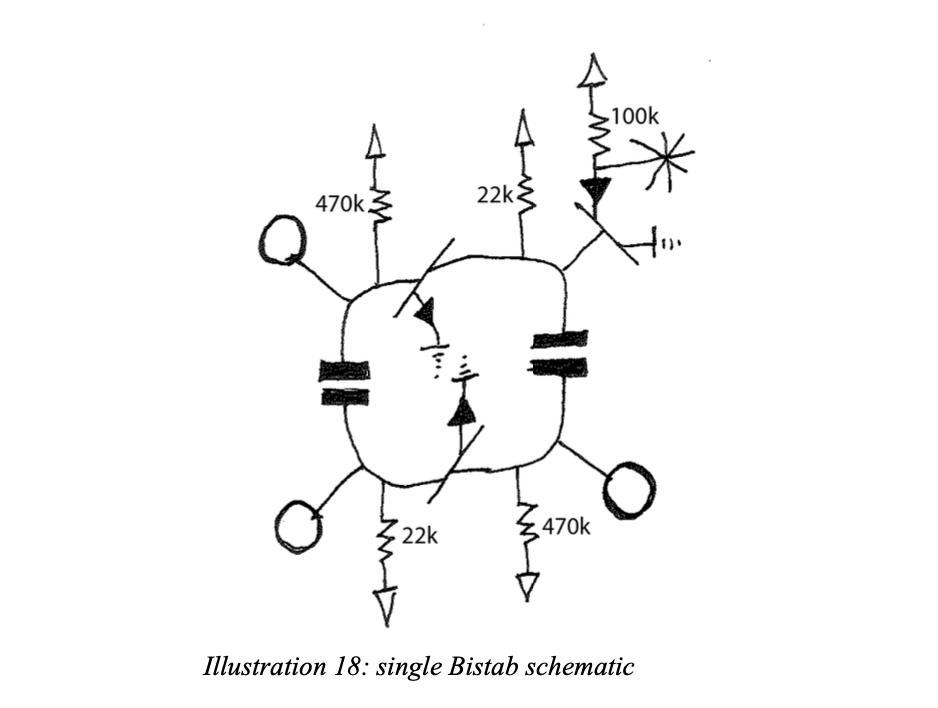
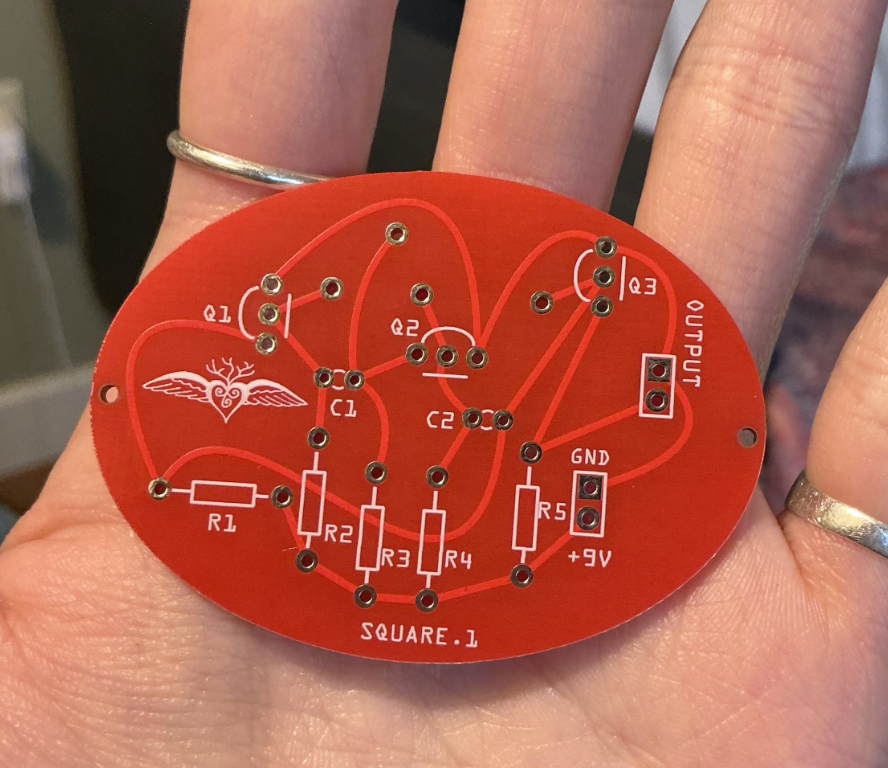
The name “bistab” is a misnomer because it is based off of an astable multivibrator, but indeed it is not bistable. John Talbert explained this to me. I replicated this schematic and printed my own PCB’s. 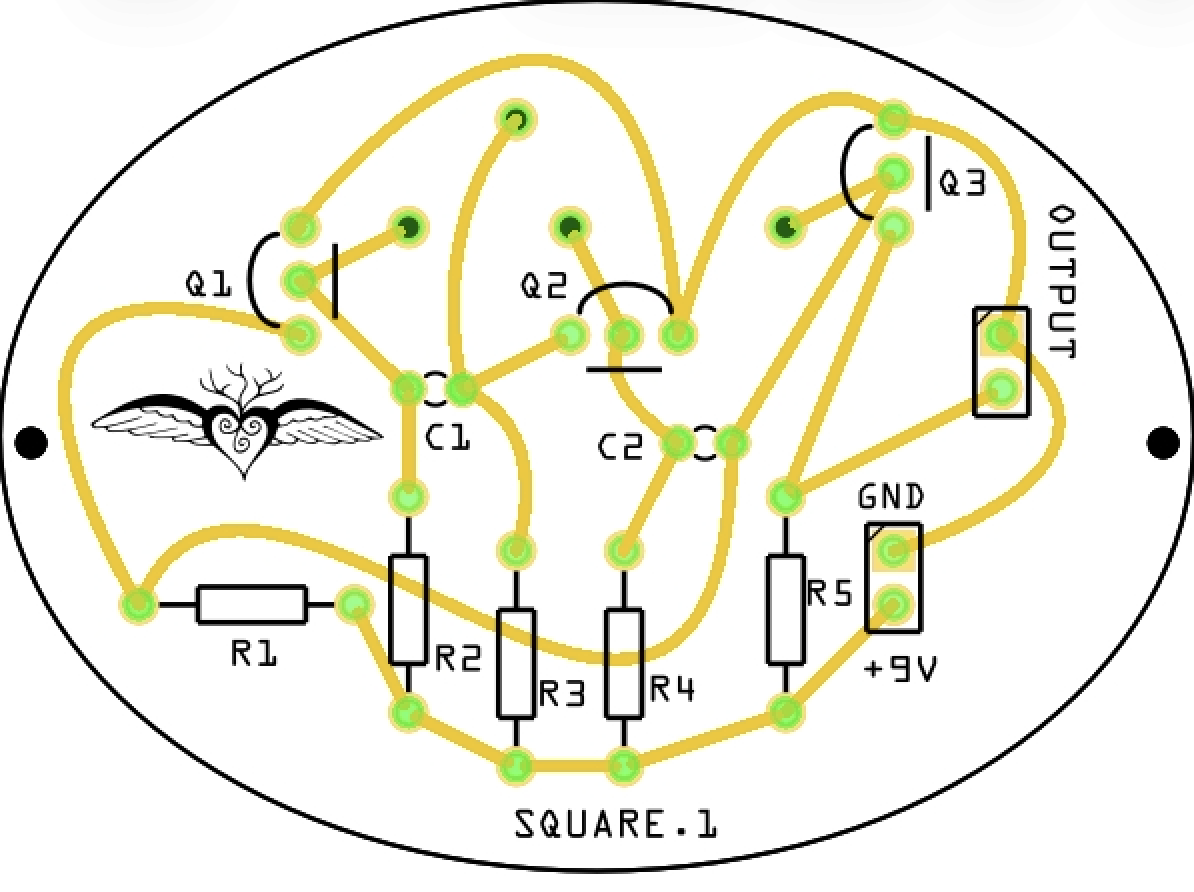
|
MAP/ACEQUIA |
|
I remember moments by the Rio Chama, by the Rio Grande, by the Acequia Madre, moments that felt like walking upstream was the easiest thing. 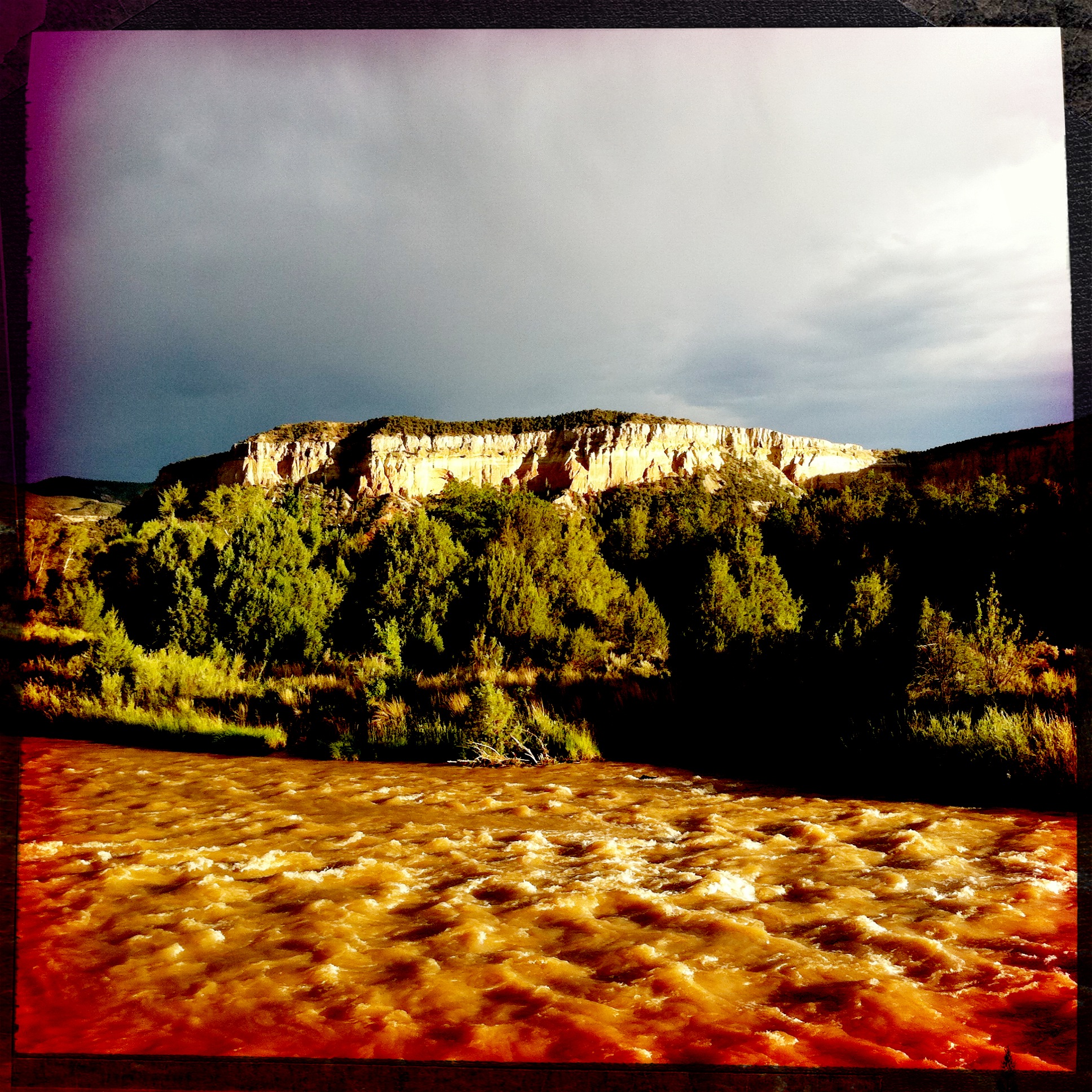
“With the passage of generations, their camposantos, or cemeteries, rooted them to the land that they had come to know with great intimacy. The Spanish villages flourished in a fashion corresponding to the flow of Nature. The acequia, or irrigation canals, became the focus of local politics beyond which few cared to stray.” (Loeffler, Introduction) 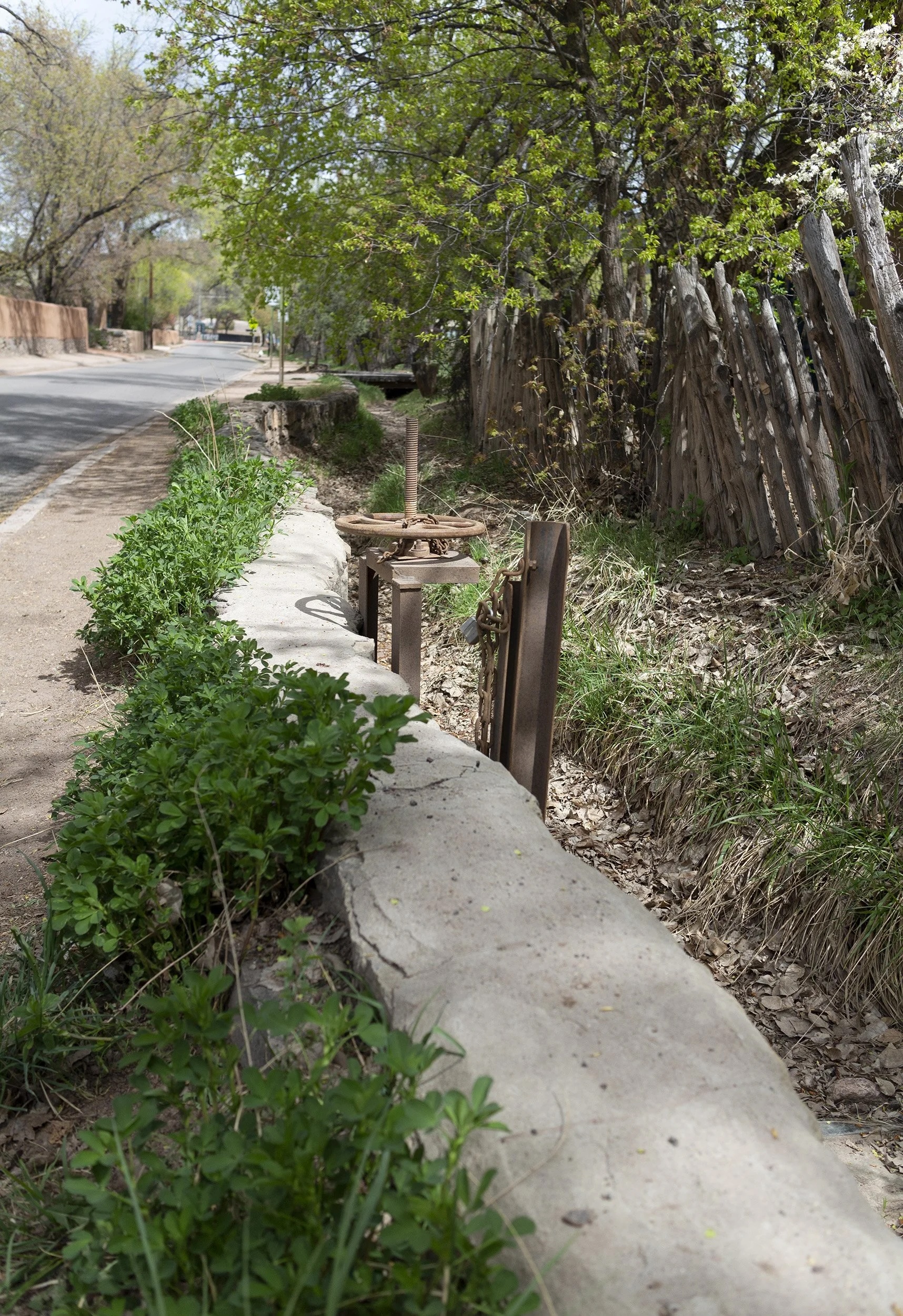
Acequia Madre The Acequia Madre is a 400 year old irrigation canal that carries water from the Sangre de Cristo (Blood of Christ) mountains to Santa Fe. Acequia’s are extremely important in New Mexico, and they are entirely communally run. In Pasatiempo’s article, “Rite of spring: Phillip Bové lectures on the Acequia Madre,” Paul Weideman says, “Cleaning the acequia is a spring ritual for parciantes, community members, and hired help… Irrigation systems were so important in this arid land that people would even begin working on them before building houses… Back in 1598, conquistador Capitán General Juan de Oñate negotiated with San Juan Pueblo to establish a settlement called San Miguel on the west bank of the Río Grande, at the confluence with the Río Chama. One of the first tasks undertaken by Oñate’s party was to dig an irrigation ditch “sufficient to irrigate the fields to be cultivated in the fertile valley between the two rivers,” When they first built the Acequia Madre, the water was not only used for crops, but as drinking water as well. So, every neighbor had to be careful about how they were using the Acequia, as to not pollute it. “To get the water down to Agua Fría, we need a certain flow, about 300 gallons a minute.” That’s so it isn’t lost through soaking into the ground along the way.” “Homeowners along the acequias must understand that caring for their section of acequia affects the flow of water to neighboring properties and to the community.” (Historic Santa Fe Foundation) 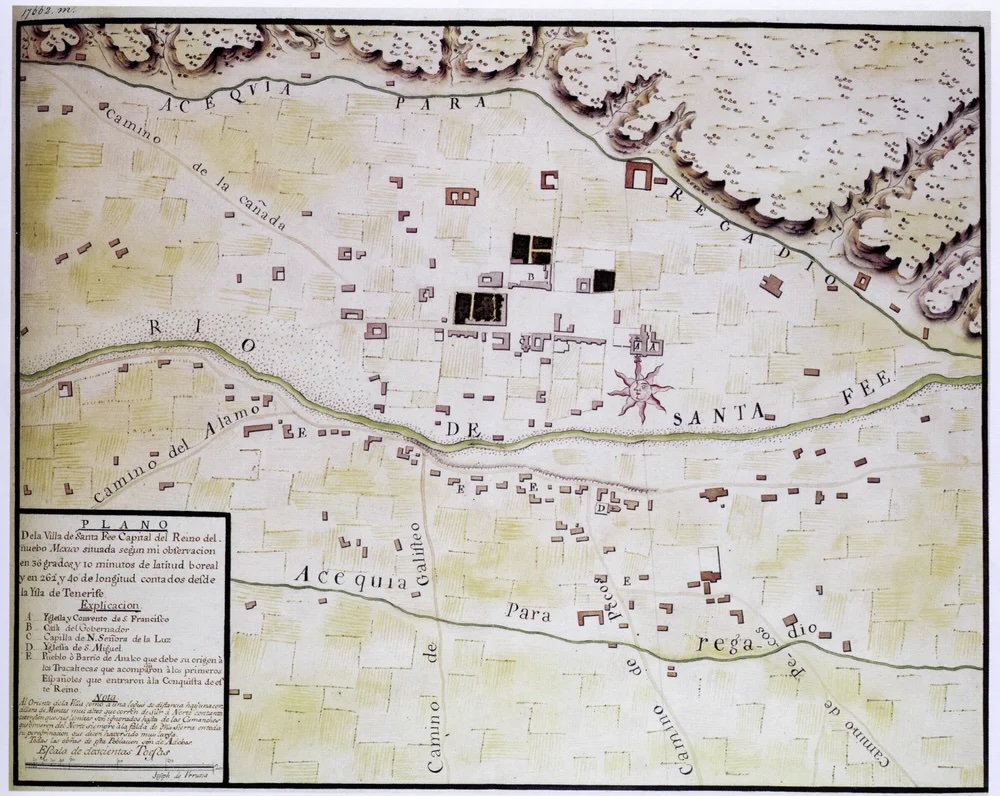
“1766 Plano de la Villa de Santa Fee, Nuebo Mexico.” Earliest known map of Santa Fe, drawn by Joseph de Urrutia. DOORS 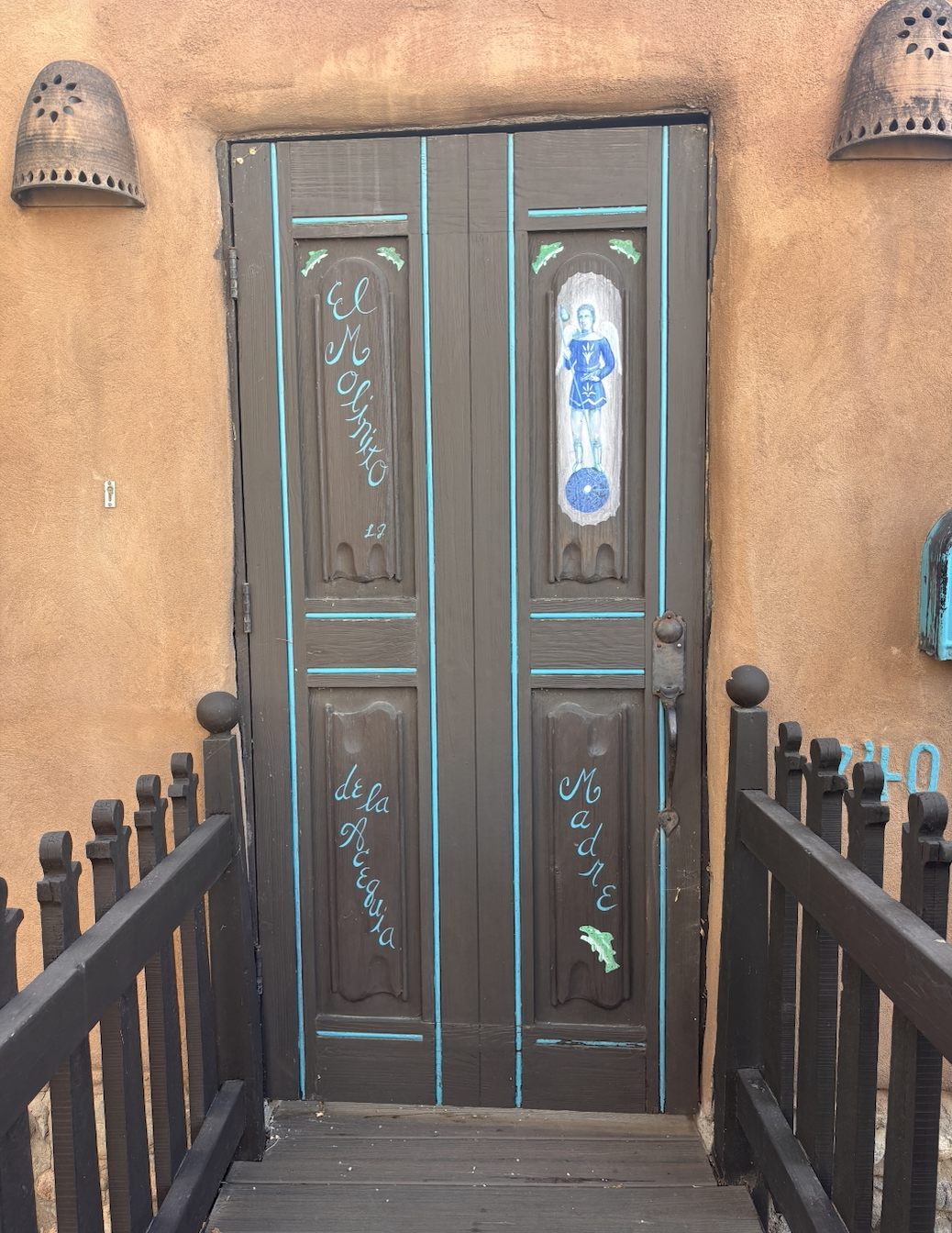
I remember walking along the Acequia, noticing the parciantes doors. The doors that allowed for access to their section of the Acequia to care for. They are adorned with Guadalupes, a painted ex-voto to keep their houses safe. WATER 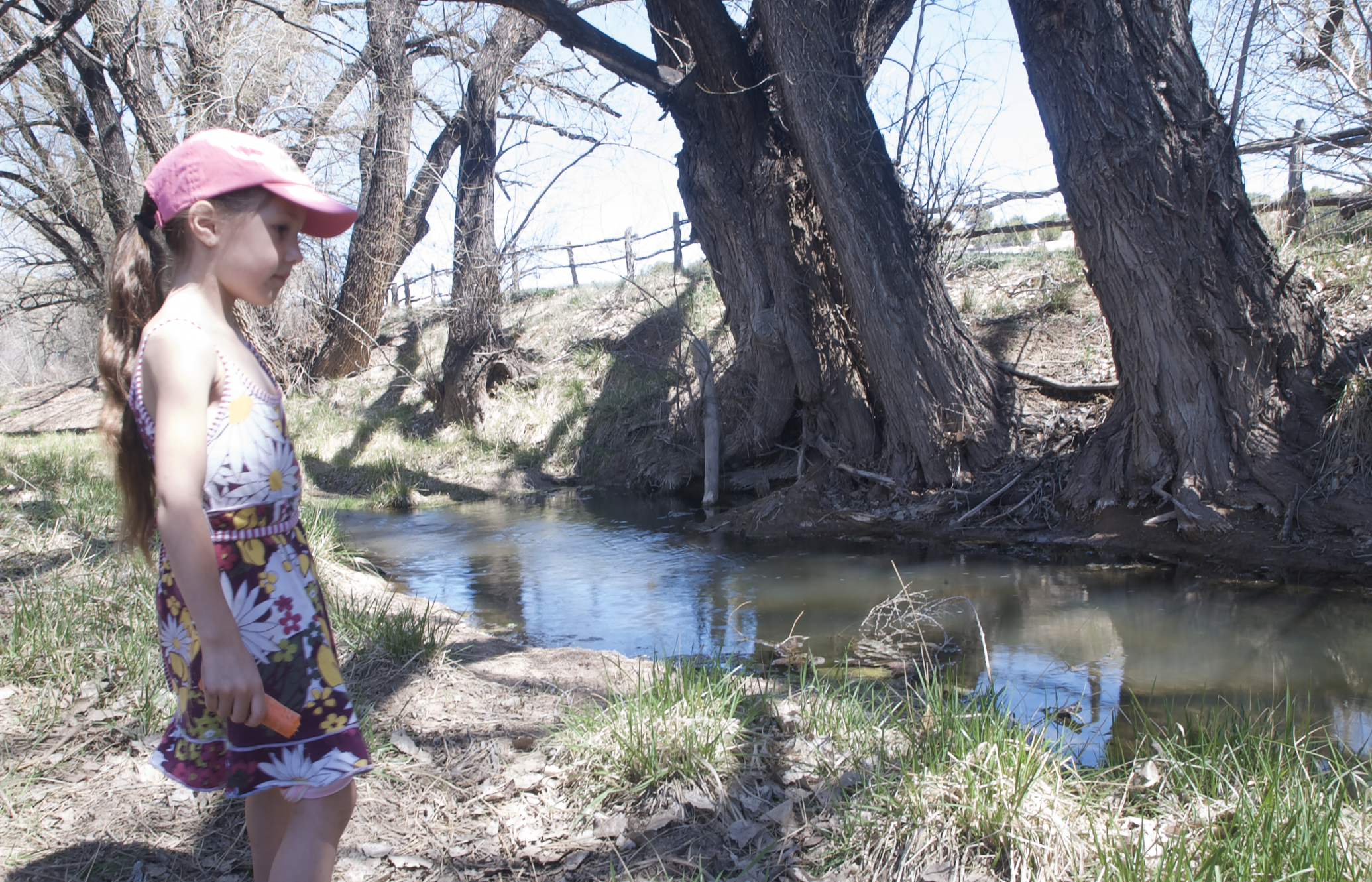
I remember my classmates and I walking barefoot in the ditch on the way to Johnny’s Cash Store in search of candy. FAROLITOS 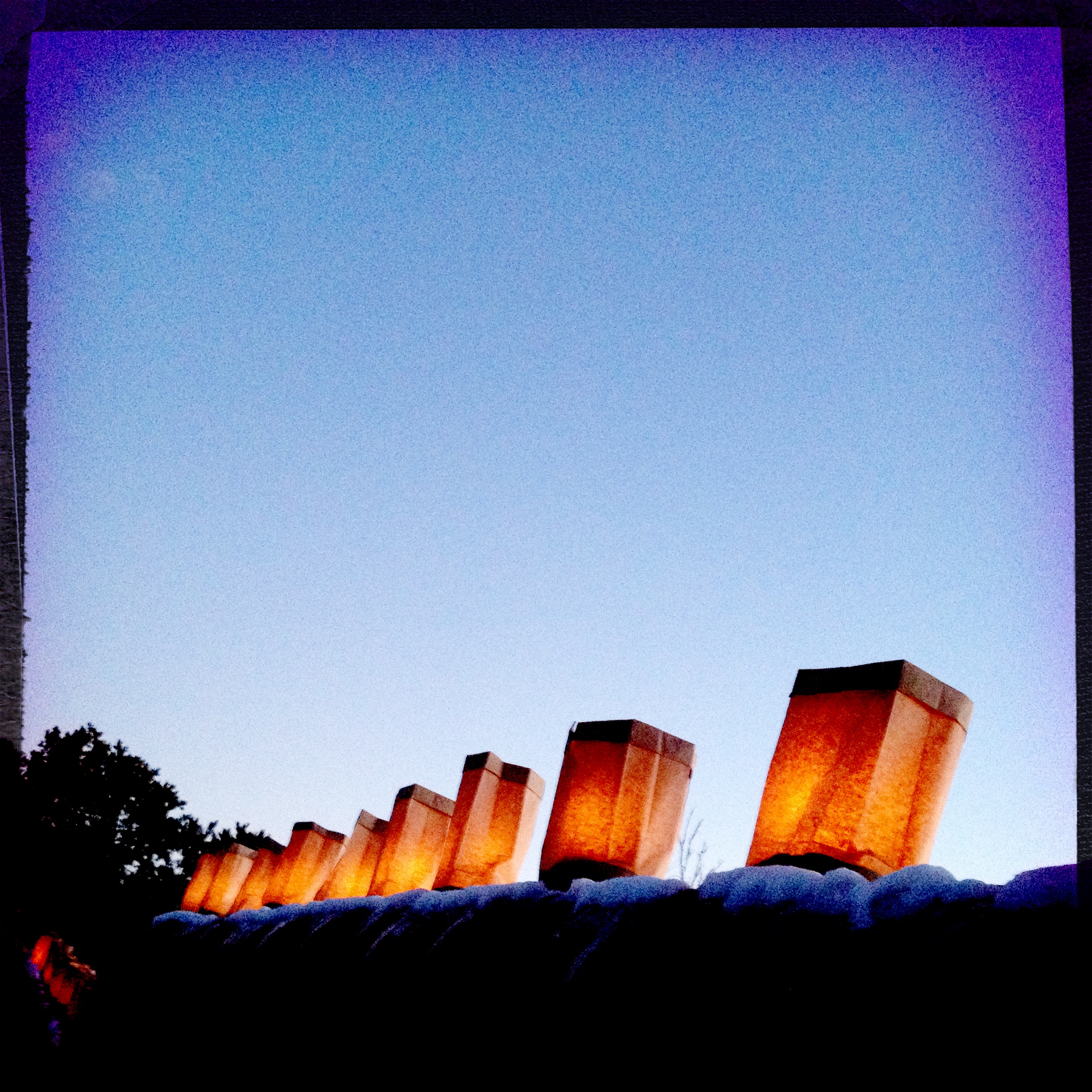
I remember making hundreds of farolitos (“little lanterns”) in my elementary school gym, covering our floor mascot, the matador. Every Christmas, all the adobe buildings in Santa Fe are decorated with farolitos. WAGONS 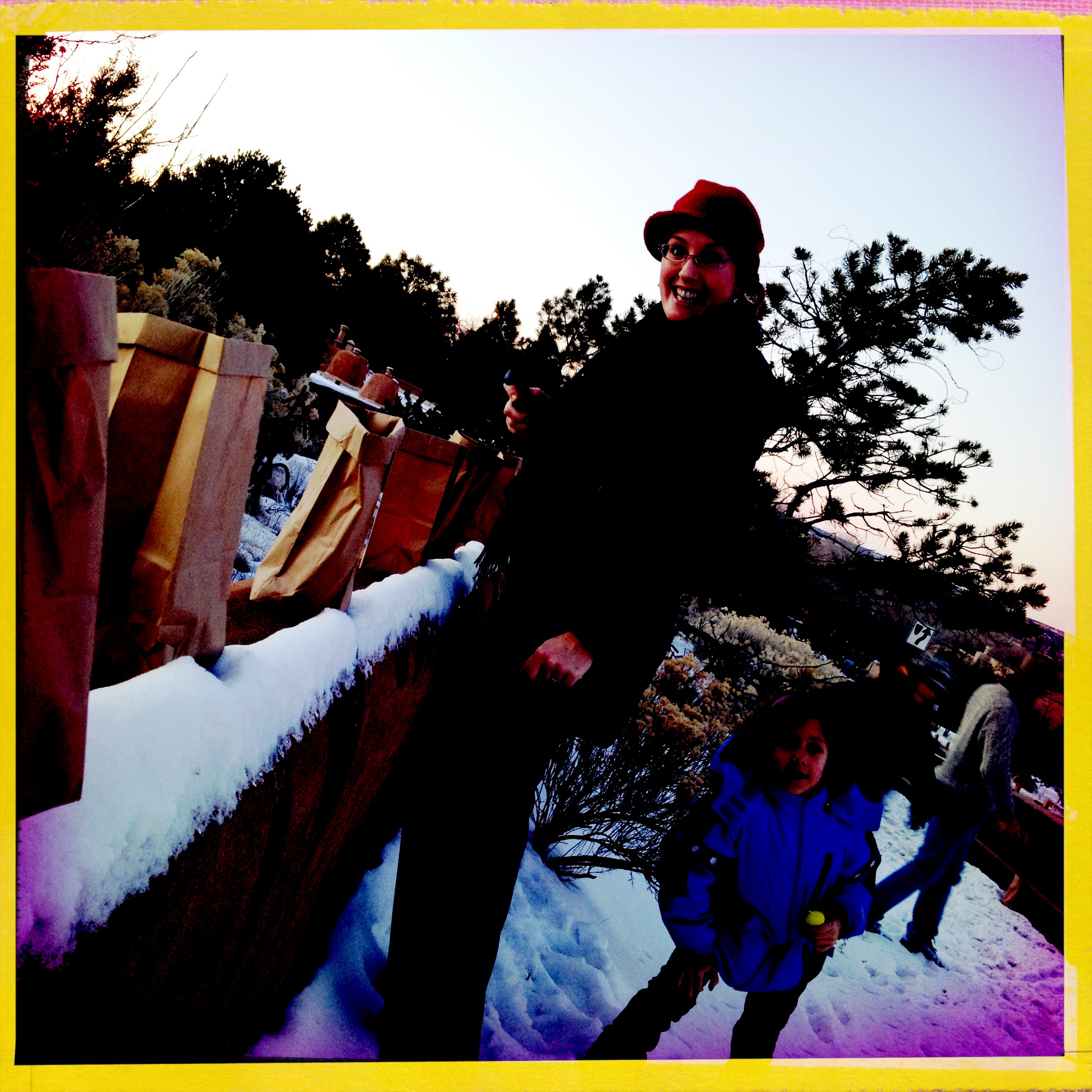
I remember being pulled around on Christmas Eve Canyon Rd. walk. A yearly tradition where people walk along the Acequia, stopping at bonfires for warm food and drinks along the way, listening to caroling and Christmas karaoke. DIRT 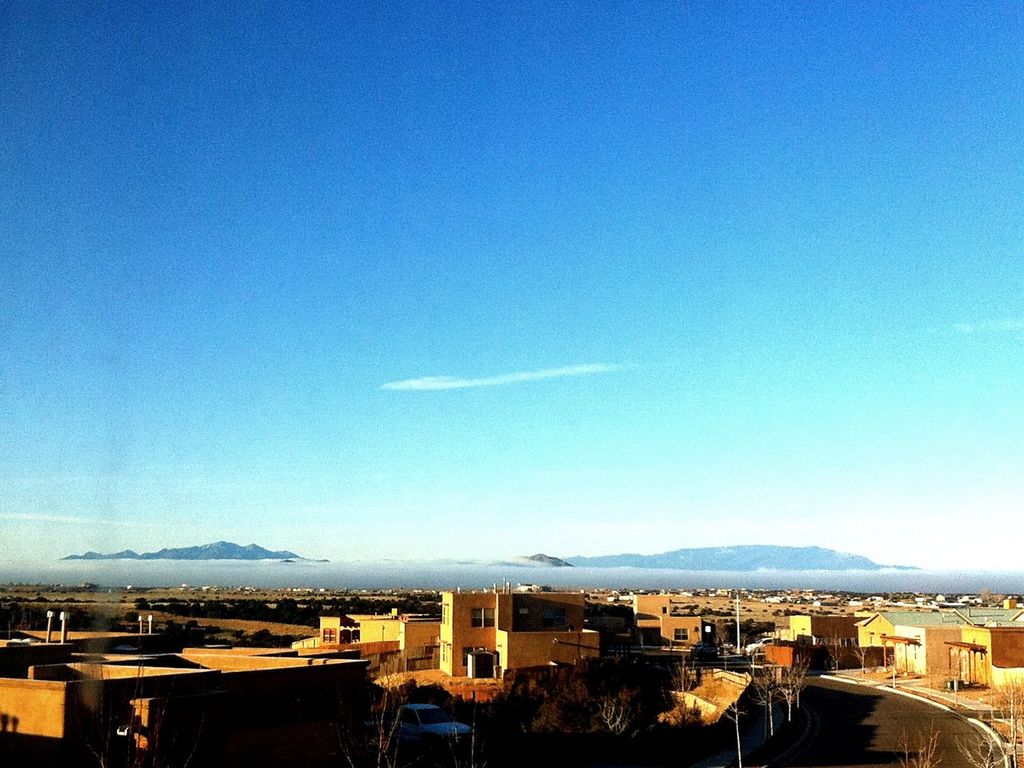
I remember all my shoes covered in a hue of red and orange dirt. I remember looking at the roofs of all the single-story adobe buildings standing at the viewpoint of Cross of the Martyrs. MERMAIDS 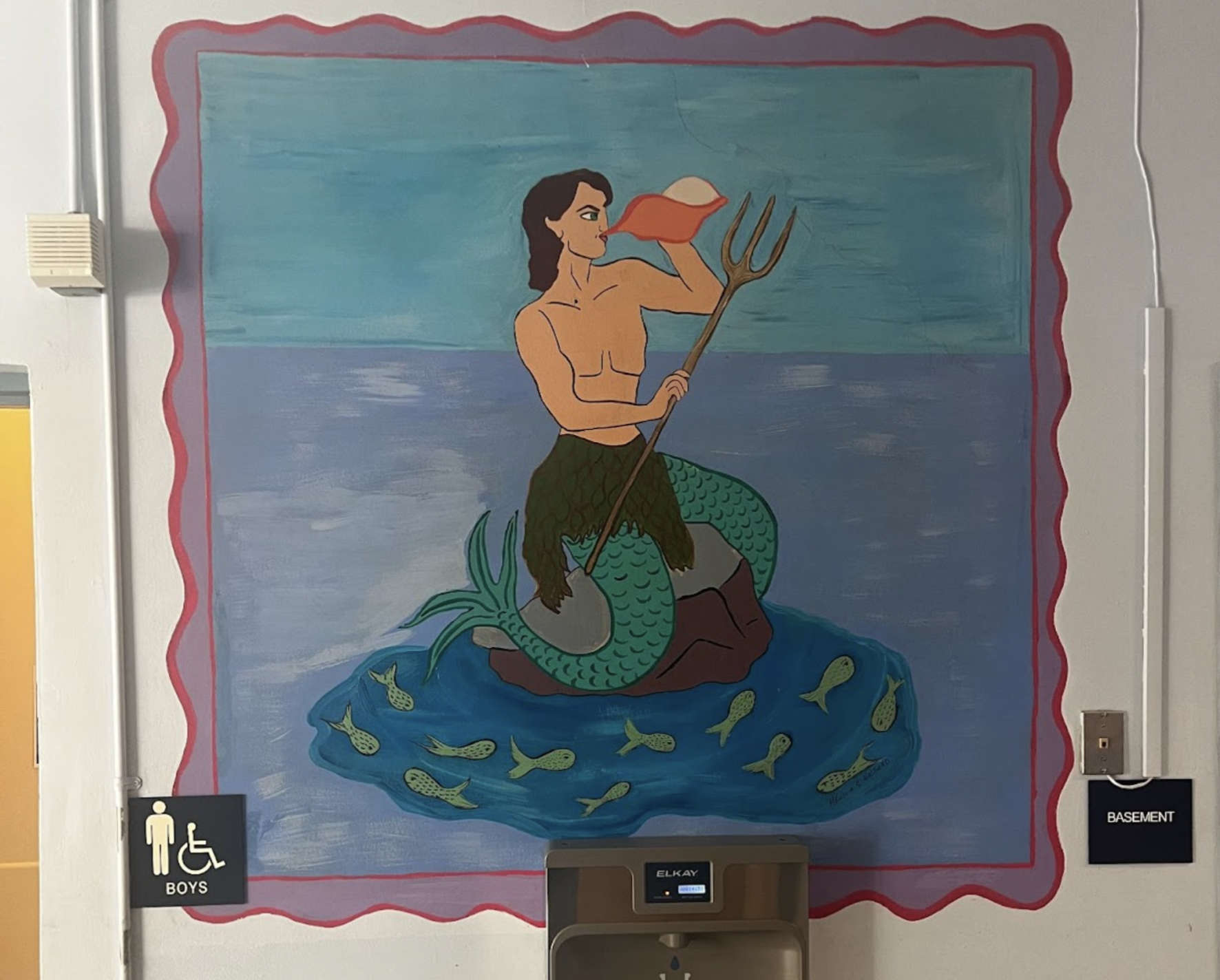
I remember looking at the strange mermaid and merman murals in the blue halls of my Acequia Madre elementary school. |
SONGS |
|
I remember “Fiestas,” a controversial yearly celebration of Spaniards taking back Santa Fe after the Pueblo Revolt of 1680, filling the streets and elementary schools with Nuevo Mexicano music, and ending with burning the effigy Zozobra, Old Man Gloom. 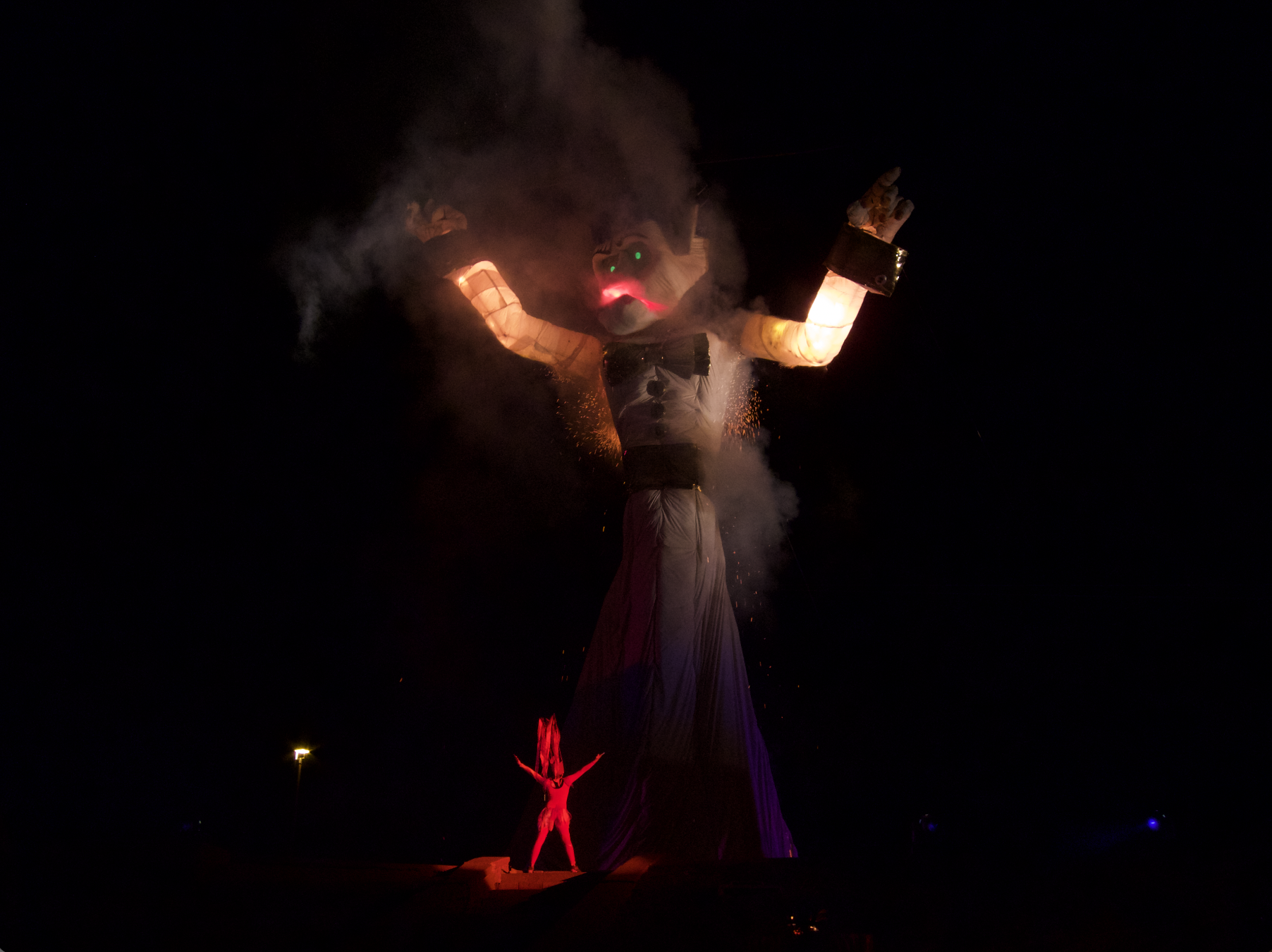
Zozobra (“Old Man Gloom”) burning The music in New Mexico connects many different traditions, New Mexico Spanish and Mexican ranchera, Indigenous music, Indigenous religious music, country, balkan, klezmer, and much more. The band Lone Piñon has an active repertoire that reflects this complexity. One of the past members was my babysitter. I was introduced to the Mexican ranchera song Deja que salga la luna through their repertoire. Deja que salga la luna was written by José Alfredo Jimenez, but was popularized by Pedro Infante. 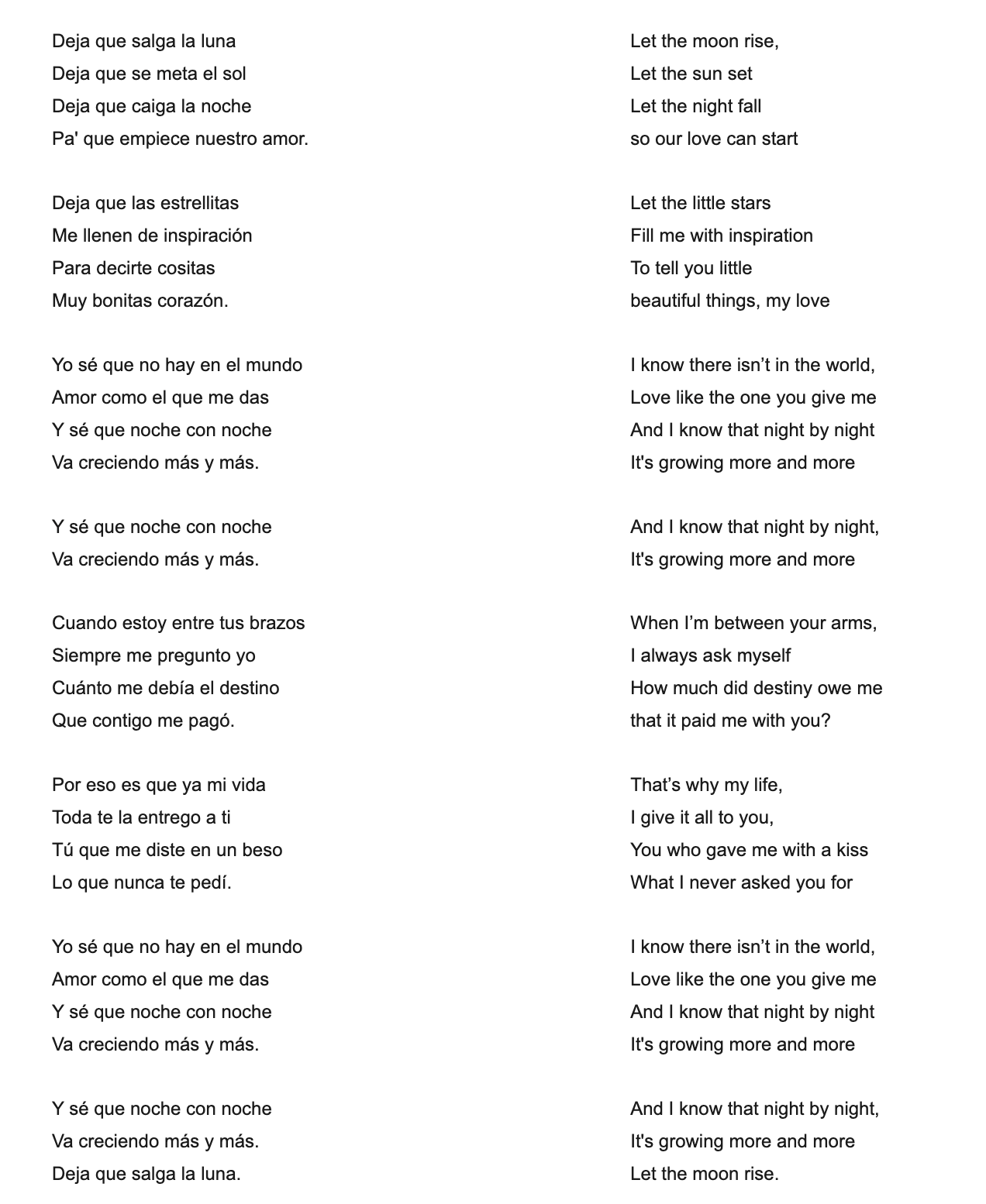
I was on the phone with my dad when he told me to look into Jack Loeffler whom he had photographed many years back. Jack Loeffler had written a book called La Música de los Viejitos about New Mexican folk songs. The book contains scores, translations, and personal descriptions of how he learned the songs. “The music expresses the heart of Hispano culture as perceived by an older generation whose memories reflect a mosaic of change. It is our belief that many older people, the elders of a culture, recall heir lifetimes in nonlinear fashion, perceiving the totality of their individual and collective existences by recalling clusters of experience related by the emotional responses they elicit rather than the moment in time at which they occurred.” (Loeffler, Introduction, XI) La Música de los Viejitos breaks down the New Mexican folk songs into seven categories: Romances y Relaciones, Inditas, Corridos, Canciones, La Música Ceremonial y Religiosa, La Música de Los Bailes, and Más Cantos, el Teatro, y los Matachines. The song that I chose is A la rú. A la rú, now known as a traditional New Mexican lullaby, comes from the Nuevo Mexicano folk drama of the Rìo Grande del Norte, “Los Pastores” (“The Shepards”). On the shepherd’s journey to present gifts to the Santo Niño (Christ Child), the young shepherdess, Gilita sings two songs expressing her love, Camina, Gilita and A la rú. A la rú (sung by Brenda Romero) from Jack Loeffler's La Música de los Viejitos A la rú (sung by Vincent Gallegos) from University of New Mexico digital archives (1959) 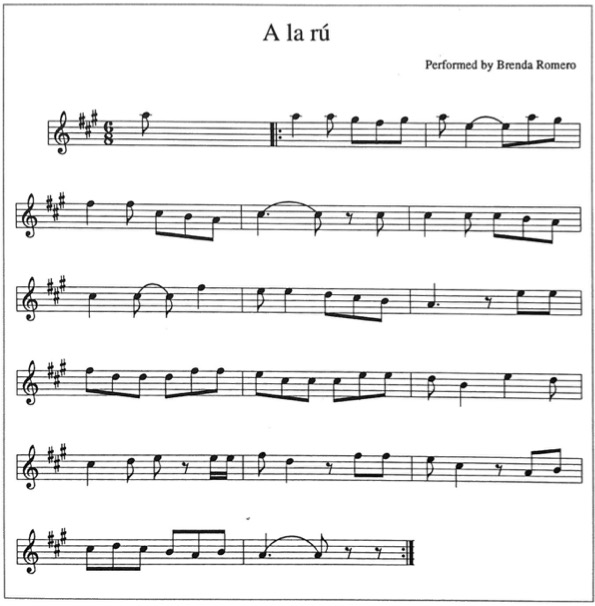
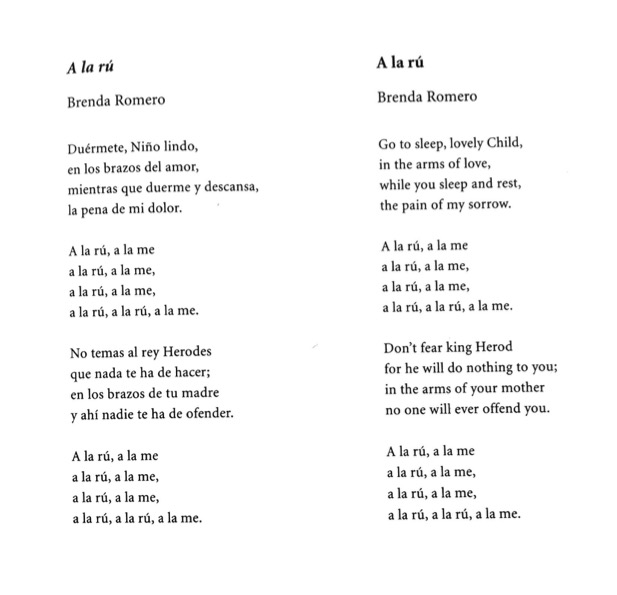
A la rú music and lyrics from La Música de los Viejitos I remember my dad singing Beautiful Dreamer for me when I was a child. It was my lullaby. Beautiful dreamer, wake unto me Starlight and dewdrops are waiting for thee Sounds of the rude world heard in the day Lulled by the moonlight have all passed away Beautiful dreamer, queen of my song List while I woo thee with soft melody Gone are the cares of life's busy throng Beautiful dreamer, awake unto me Beautiful dreamer, awake unto me Beautiful dreamer, queen of my song List while I woo thee with soft melody Gone are the cares of life's busy throng Beautiful dreamer, awake unto me Beautiful dreamer, awake unto me 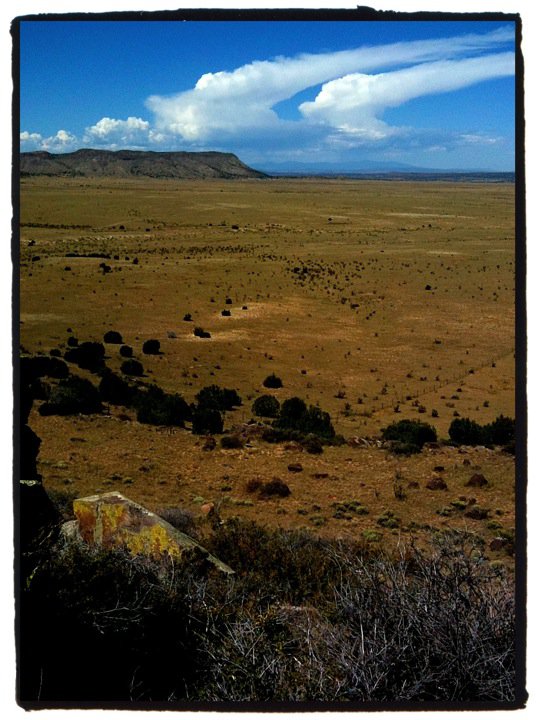
Thank you to my private lesson teacher Francis Wilson for always supporting, pushing, and being excited about my ideas. Thank you to my parents, Sitara and Jason, for raising me in such a beautiful place and always inspiring me. Thank you to my partner Ben for always smiling, for being there, and seeing me. Thank you to the TIMARA department for being the best department ever, you guys rule so much. Thank you to Vivian for making my beautiful program notes. Thank you to Mae for being my awesome stylist and making me gorgeous dresses. Thank you to Eli Rosenkim for helping me out when I had circuit troubles. Thank you to my best friends back home, Claire, Lucia, and Jules for still being there for me all these years later. If you made it to the end of this, thank you for listening and reading. |
SOURCES |
|
Colcha Embroidery as Intentional Heritage (New Mexico Colcha Club Essay) Understanding Ex-Votos Wandering Testimonies: The Diaspora of Mexican Ex-votos (and their stories) Santuario de Chimayo KOBAKANT Ciat Lonbarde (Peter Blasser's website) Peter Blasser's Tocante Peter Blasser's Wesleyan University Dissertaion, Stores at the Mall Esquemáticos: Amor Muńoz’s embroidered sound tapestries DXARTS softlab (University of Washing e-textile lab) Loess Labs (Dylan, makes his own version of Peter B instruments) Rite of spring: Phillip Bové lectures on the Acequia Madre Historic Maps of Santa Fe Historic Santa Fe Foundation Zine Historic Santa Fe Foundation Acequia Madre Fiestas de Santa Fe Documentary about Lone Pińon And Those Who Dance It Surrender Their Hearts to Each Other Lone Piñon Bandcamp |